Introduction |
Do you really believe that achieving a professional, airy, and charred crust is reserved only for the master pizzaiolos of Naples? Most home cooks assume they lack the specialized ovens or secret ingredients required to replicate that authentic texture, but the truth is far simpler and more exciting than you imagine.
I almost gave up on this recipe until I stopped fighting the dough and started listening to it. For years, my crusts were either dense like crackers or soggy in the middle, leaving me frustrated and convinced that my kitchen was simply incapable of producing a true Italian masterpiece.
The magic happens when you embrace the patience of fermentation and the tactile feel of the flour. This process is not a rigid set of rules, but rather an invitation to explore how humidity and temperature transform a few simple ingredients into a cloud-like foundation for your favorite toppings.
- ●The texture provides a sophisticated contrast between a crisp exterior and a soft, chewy interior. This specific balance prevents the dough from feeling too heavy or bread-like.
- ●You get a deep, complex flavor profile developed through a slow fermentation process. The long rest allows the yeast to create nutty, aromatic notes that instant recipes lack.
- ●This dough is incredibly versatile and adapts to various toppings. It supports everything from a light Margherita to a heavy-loaded meat feast without collapsing.
- ●It transforms your home kitchen into a gourmet pizzeria. Using these techniques ensures your guests will question why you didn’t just order from a professional.
- ●The process teaches you the intuitive art of kneading. You will learn exactly how the dough should feel when it reaches peak elasticity and strength.
Essential Ingredients |
00 Flour provides the silky-smooth texture and high protein content necessary for a strong gluten structure. You can substitute this with high-protein bread flour for a slightly heartier chew.
Warm Water activates the yeast and hydrates the flour to create a supple, workable mass. Filtered water is preferred to avoid chlorine interference, but tap water works in a pinch.
Active Dry Yeast serves as the biological engine that lifts the dough and creates those iconic air bubbles. Fresh compressed yeast is a professional alternative for a more robust rise.
Sea Salt enhances the natural sweetness of the wheat and regulates the yeast activity. Kosher salt is a perfect replacement if sea salt is unavailable.
Extra Virgin Olive Oil adds a subtle richness and helps the dough stretch without tearing. A small amount of avocado oil can be used for a more neutral flavor.
 Let’s Make it Together |
- Combine the warm water and yeast in a large bowl, stirring gently to merge them. Pro tip: Let the mixture sit for five minutes until it becomes foamy to ensure your yeast is active.
- Sift the flour and salt together into a separate mixing bowl to avoid clumps.
- Fold the wet mixture into the dry ingredients using a sturdy spoon until a shaggy ball forms.
- Knead the dough on a floured surface for ten minutes until it is smooth and bounces back when poked. Pro tip: Use the heel of your hand to push the dough away from you for maximum gluten development.
- Place the dough in a lightly oiled bowl and cover it with a damp cloth.
- Allow the dough to rise in a warm, draft-free spot for at least two hours. Pro tip: For a more complex flavor, place the bowl in the refrigerator for 24 hours instead of a quick room-temperature rise.
- Punch down the risen dough to release excess gas and divide it into equal portions.
- Shape each portion into a tight ball and let them rest for another 30 minutes before stretching.
Never use boiling water as it will kill the yeast instantly.
Avoid using a rolling pin because it crushes the air bubbles you worked so hard to create.
Ensure your oven is preheated to its absolute maximum temperature before sliding in the pizza.
Dust your surface with cornmeal or semolina to prevent the dough from sticking.
Watch the dough, not the clock, as rising times vary based on your room temperature.
Perfecting the Cooking Process |
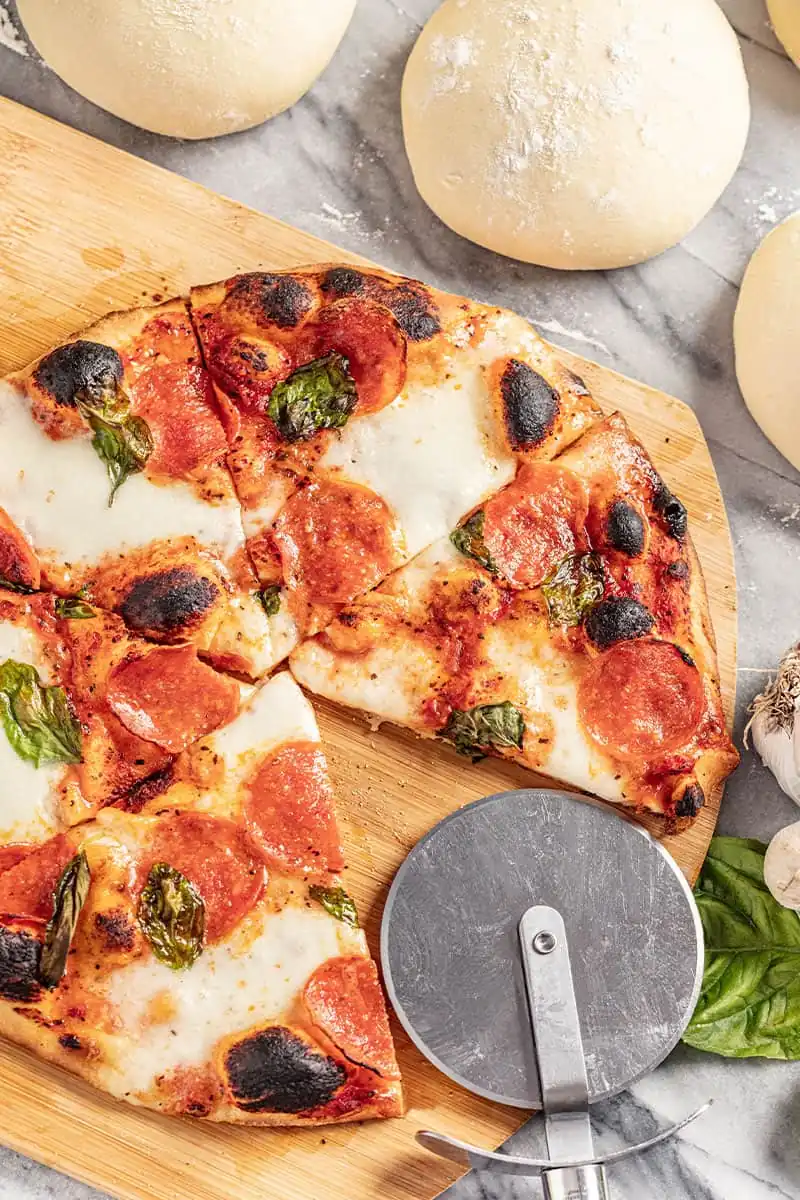
The secret to a professional crust lies in the thermal shock of the bake. You need to create a high-heat environment that mimics a stone oven, which is why a pizza stone or a preheated inverted baking sheet is essential. Have you ever noticed how the edges of a pizza puff up instantly in a restaurant? That happens because the base is searingly hot, forcing the moisture in the dough to turn into steam rapidly.
Timing is everything during the final stretch. Avoid overloading your pizza with wet ingredients, as this will cause the center to remain doughy while the edges burn. Aim for a bake time of 8 to 12 minutes at the highest possible setting, rotating the pie halfway through to ensure an even, golden-brown char across the entire surface.
Add Your Touch |
Why settle for a plain crust when you can infuse it with flavor? Try folding in a tablespoon of garlic powder or dried oregano during the kneading phase for a seasoned base. You could even swirl in some grated parmesan cheese to create a savory, salty crust that tastes like a gourmet appetizer.
Experiment with the hydration levels to change the style of your pizza. Adding an extra tablespoon of water creates a wetter dough that is harder to handle but results in those massive, charred bubbles seen in Neapolitan styles. For a crispier, thinner base, slightly reduce the water and increase the kneading time.
Storing & Reheating |
Store unused dough balls in individual airtight containers in the refrigerator for up to three days. The cold environment slows the yeast, creating a slow ferment that actually improves the flavor and makes the dough easier to stretch.
To reheat a cooked slice, avoid the microwave which makes the crust rubbery. Instead, place the slice in a dry skillet over medium heat for two minutes, then add a drop of water to the pan and cover with a lid for thirty seconds to steam the cheese back to life.
1Use a digital scale for measurements to ensure total consistency every time.
2Perform the windowpane test by stretching a small piece of dough until it is translucent.
3Apply a light coating of olive oil to your hands to avoid sticking during shaping.
4Allow the dough to come to room temperature for an hour before stretching if it was chilled.
5Use a pizza peel dusted with flour to slide the pie effortlessly into the oven.
FAQ |
- ●Q: Why is my dough too sticky to handle?A: This usually happens when the flour-to-water ratio is off or the humidity in your kitchen is very high. Gently add one tablespoon of flour at a time and continue kneading until the dough clears the sides of the bowl.
- ●Q: Can I use all-purpose flour instead of 00 flour?A: Yes, you can, but the result will be different. All-purpose flour has less protein, meaning the crust will be softer and less chewy than the characteristic bite of a true Italian pizza.
- ●Q: How do I know when the dough is finished rising?A: The dough should roughly double in size and feel light and airy to the touch. If you press a finger into it and the indentation stays without springing back, it is ready.
- ●Q: Why did my pizza crust turn out hard and dry?A: This is often caused by over-baking or using too much flour during the kneading process. Ensure your oven is hot enough to cook the pizza quickly, which locks in the moisture.

The Ultimate Italian Style Pizza Dough: A Journey to the Perfect Crust
- Total Time: 30 minutes
- Yield: 4 medium pizzas 1x
Description
A professional-grade Italian pizza dough featuring a slow-rise fermentation for maximum flavor and a light, airy texture.
Ingredients
- 500g 00 Flour (or bread flour)
- 325ml warm water
- 7g active dry yeast
- 10g sea salt
- 15ml extra virgin olive oil
Instructions
- Mix warm water and yeast; let sit for 5 minutes.
- Combine flour and salt in a large bowl.
- Mix wet and dry ingredients into a shaggy mass.
- Knead for 10 minutes until smooth and elastic.
- Place in oiled bowl, cover, and let rise for 2 hours (or 24 hours in fridge).
- Punch down dough and divide into 4 balls.
- Rest balls for 30 minutes before stretching.
- Bake at maximum oven temperature on a preheated stone for 8-12 minutes.
- Prep Time: 20 minutes
- Cook Time: 10 minutes
- Category: Baking
- Method: Baking
- Cuisine: Italian