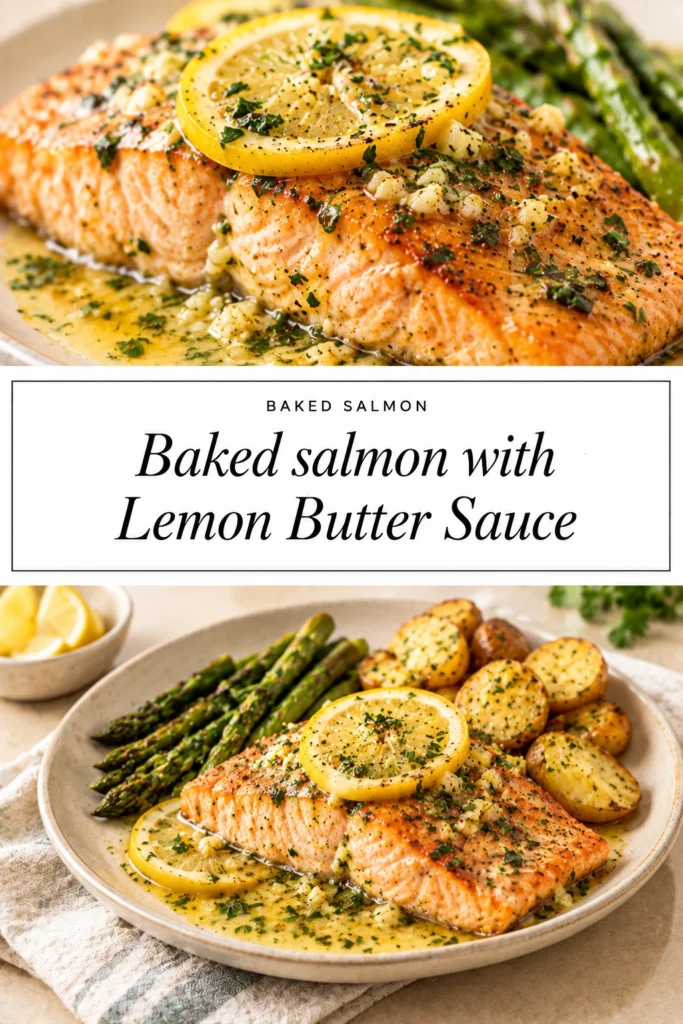
This dish features tender, flaky salmon fillets bathed in a rich, zesty sauce. It is a refined yet simple meal that feels like a treat but requires minimal effort.
The recipe focuses on a classic pairing of bright citrus and melted butter to cut through the richness of the fish. This balance creates a clean, savory profile that appeals to most palates.
Many home cooks avoid salmon because they fear overcooking it or making it taste too fishy. This method uses a consistent oven temperature to keep the center moist.
Unlike store-bought marinated fillets, this version allows you to control the salt and acidity levels. You get a fresh, homemade taste without any artificial preservatives.
This meal is ideal for anyone needing a healthy dinner that does not feel like a compromise. It provides a high-protein option that looks impressive on the plate.
The following guide provides the exact steps to achieve a juicy result every time.
- ●Why You’ll Love This Recipe
- ●A Brief Background on the Method
- ●Perfect For Busy Weeknights and Special Occasions
- ●Salmon Spotlight
- ●The Role of Butter and Lemon
- ●Key Ingredients
- ●How to Make It
- ●Pro Tips
- ●Delicious Variations
- ●Best Ways to Serve
- ●Storage and Leftovers
- ●Frequently Asked Questions
- ●Why This Recipe Belongs in Your Weekly Rotation
- ●Final Thoughts
This salmon dish is designed for efficiency and flavor, making it a reliable choice for any night of the week.
- ●The lemon butter sauce adds a silky texture that keeps the fish from drying out.
- ●Preparation time is minimal, requiring only basic chopping and mixing.
- ●One baking sheet handles the cooking, reducing the amount of cleanup.
- ●The acidity of the lemon neutralizes the strong oils found in salmon.
- ●It works well with various types of salmon, from Atlantic to Sockeye.
- ●The cooking time is short, meaning you can get dinner on the table quickly.
- ●It provides a sophisticated presentation suitable for guests.
- ●The ingredients are common pantry staples that most people already own.
These factors make the recipe a practical choice for maintaining a balanced diet without spending hours in the kitchen.
A Brief Background on the Method |
Baking salmon at a moderate temperature allows the heat to penetrate the thickest part of the fillet without searing the outside too quickly. This creates an even cook from edge to center.
The addition of butter acts as a protective layer, sealing in the natural juices of the fish. When combined with lemon juice, the fats emulsify slightly to create a cohesive glaze.
This approach is similar to the techniques used in Baked Lemon Butter Chicken A Chefs Guide To Juicy Perfection Easy Dinner Ideas, where the acidity and fat work together to tenderize the protein.
Perfect For Busy Weeknights and Special Occasions |
On a typical Tuesday, this recipe is a lifesaver. It takes very little active effort, allowing you to multitask while the oven does the work.
For meal prep, these fillets hold up well when stored in airtight containers. They can be eaten cold over a salad or gently warmed for lunch.
When hosting a holiday or a dinner party, this dish provides a gourmet feel. It pairs naturally with roasted vegetables or a crisp white wine, making it a centerpiece-worthy meal.
Salmon Spotlight |
Salmon is the primary protein here because of its high fat content and distinct flavor. These natural oils make it more forgiving during the baking process than leaner white fish.
The texture of a well-baked salmon fillet is buttery and tender. Because it is rich in omega-3 fatty acids, it pairs exceptionally well with sharp, acidic components like lemon.
The Role of Butter and Lemon |
Butter provides the richness and the vehicle for the garlic to infuse into the fish. It creates a mouthfeel that is luxurious and satisfying.
Lemon juice provides the necessary contrast. The citric acid breaks down the heavy feeling of the butter and the oils of the fish, brightening the overall flavor profile.
Together, they form a classic beurre blanc-style essence that is common in professional seafood preparation.
Key Ingredients |
These components work together to create a balanced, savory meal.
- ●Salmon Fillets — The main protein that provides a rich, hearty base.
- ●Unsalted Butter — Adds richness and helps the sauce cling to the fish.
- ●Fresh Lemon — Provides both juice for acidity and zest for a concentrated citrus aroma.
- ●Garlic — Adds a pungent, savory depth that complements the seafood.
- ●Fresh Parsley — Adds a pop of color and a clean, herbal finish.
- ●Salt and Black Pepper — Essential seasonings that enhance all the other flavors.
How to Make It |
Follow these steps to ensure the salmon remains moist and the sauce is perfectly balanced.
- Prepare the oven and pan: Preheat your oven to 400°F (200°C). Line a baking sheet with parchment paper or aluminum foil to prevent the butter sauce from sticking and to make cleanup easier.
- Season the fish: Pat the salmon fillets completely dry with paper towels. This is important because excess moisture creates steam, which prevents the fish from developing a nice exterior. Season both sides with salt and pepper.
- Create the butter mixture: Melt the butter in a small bowl or microwave. Stir in the minced garlic and lemon juice. Ensure the garlic is evenly distributed so no single bite is overpowered .
- Apply the sauce: Place the fillets on the prepared pan. Spoon the lemon butter mixture generously over each piece of fish. This layer of fat protects the salmon from the dry heat of the oven.
- Bake the salmon: Place the pan in the center rack of the oven. Bake for 12 to 15 minutes. The exact time depends on the thickness of your fillets. The fish is done when it flakes easily with a fork.
- Final garnish: Remove the pan from the oven and immediately sprinkle with fresh parsley and a bit of lemon zest. The residual heat will release the oils in the zest, making the dish smell fresh.
1Use these suggestions to refine your technique and avoid common mistakes.
- ●2Room temperature fish: Let the salmon sit out for 15 minutes before baking so it cooks evenly through the center.
- ●3Check for doneness: Use a meat thermometer to hit 145°F (63°C) for a standard cook, or 130°F (54°C) for a slightly more tender, medium-rare center.
- ●4Avoid over-mixing: When stirring the sauce, do not over-whisk it or the butter may separate too quickly.
- ●5Use fresh lemons: Bottled lemon juice often has a bitter aftertaste that can clash with the delicate flavor of the salmon.
- ●6Squeeze extra lemon: Adding a fresh squeeze of lemon juice right before serving wakes up the flavors that may have dulled in the oven.
Delicious Variations |
You can easily adapt this recipe to suit different dietary needs or flavor preferences.
- ●Honey Glazed: Stir a teaspoon of honey into the butter for a sweet and savory contrast.
- ●Dairy-Free: Substitute the butter with olive oil or a vegan butter alternative.
- ●Caper Addition: Add a tablespoon of drained capers to the sauce for a salty, briny punch.
- ●Herb Swap: Use fresh dill instead of parsley for a more traditional Nordic flavor.
- ●Spicy Kick: Add a pinch of red pepper flakes to the melted butter for subtle heat.
These changes allow you to use the same basic technique while exploring different taste profiles.
Best Ways to Serve |
Because the sauce is so rich, this salmon pairs best with sides that offer a fresh or earthy contrast.
- ●Steamed asparagus or sautéed spinach.
- ●Fluffy quinoa or wild rice.
- ●Roasted ba rosemary.
- ●A crisp cucumber and radish salad.
For a lighter meal, serve the salmon over a bed of fresh arugula. The peppery greens balance the buttery sauce perfectly.
If you prefer a heartier dinner, a side of mashed cauliflower or roasted carrots adds a sweetness that complements the lemon.
Storage and Leftovers |
Refrigerating
Place the cooked salmon and any remaining sauce in an airtight container. Store it in the refrigerator for up to 3 days.
Reheating
Avoid the microwave, as it can make salmon rubbery. Instead, warm the fish in a 275°F (135°C) oven for 10 minutes, covered with foil to retain moisture.
Freezing
Cooked salmon does not freeze well due to the high fat content, which can change the texture. It is best to consume this dish within 3 days of cooking.
Frequently Asked Questions |
- ●Q: Can I use frozen salmon fillets for this recipe?
A: Yes, you can use frozen fillets, but they must be completely thawed in the refrigerator overnight. Baking frozen fish directly leads to uneven cooking and a watery sauce that does not cling to the protein. - ●Q: How do I know if the salmon is overcooked?
A: Overcooked salmon will look pale and feel firm to the touch. You will also see a lot of white protein, called albumin, pushing out of the sides of the fillet. The fish should still be slightly translucent in the center. - ●Q: What is the best type of salmon for baking?
A: King salmon is the most buttery and forgiving, while Sockeye is leaner and has a stronger flavor. For this specific lemon butter sauce, Atlantic salmon is a great middle-ground choice that is widely available and affordable. - ●Q: Can I bake this in foil packets?
A: Yes, baking in foil packets steams the fish and keeps it very moist. However, you will lose the slight caramelization that occurs on an open pan. If using packets, increase the cooking time by 2 to 3 minutes. - ●Q: My sauce separated in the oven, why did that happen?
A: Butter can separate if the oven is too hot or if the lemon juice was added too quickly to very hot butter. This is purely an aesthetic issue and does not affect the taste of the final dish.
Why This Recipe Belongs in Your Weekly Rotation |
Integrating this meal into your schedule simplifies healthy eating. It provides a high-quality source of protein and healthy fats without requiring a long list of exotic ingredients.
The versatility of the lemon butter base means you can change the side dishes every week to keep the menu interesting. It is a foundation recipe that teaches the basics of seafood temperature control.
Ultimately, it offers the satisfaction of a restaurant-style meal with the comfort of a home-cooked dinner. It is a reliable win for any cook regardless of their skill level.
Final Thoughts |
This Baked Salmon with Lemon Butter Sauce combines simplicity with elegant flavors. a few high-quality ingredients and a steady oven temperature, you get a dish that is consistently juicy and bright.
It is a practical solution for those who want a nutrient-dense meal that does not feel like a chore to prepare. The balance of citrus and butter makes it a crowd-pleaser for families and guests alike.
Gather your ingredients and give this fresh, flavorful dinner a try tonight.
Baked Salmon with Lemon Butter Sauce
- Total Time: 25 minutes
- Yield: 4 servings 1x
Description
Tender salmon fillets baked to perfection and topped with a rich, zesty lemon butter sauce. A healthy, high-protein meal that is ready in under 30 minutes.
Ingredients
- 4 salmon fillets (6 oz each)
- 4 tablespoons unsalted butter, melted
- 2 tablespoons fresh lemon juice
- 1 tablespoon lemon zest
- 3 cloves garlic, minced
- 2 tablespoons fresh parsley, chopped
- 1/2 teaspoon salt
- 1/4 teaspoon black pepper
Instructions
- Preheat your oven to 400°F (200°C) and line a baking sheet with parchment paper.
- Pat the salmon fillets dry with paper towels and season both sides with salt and pepper.
- In a small bowl, whisk together the melted butter, lemon juice, and minced garlic.
- Place the salmon fillets on the baking sheet and spoon the lemon butter mixture evenly over each fillet.
- Bake for 12-15 minutes, or until the salmon flakes easily with a fork and reaches an internal temperature of 145°F.
- Remove from the oven and garnish with fresh parsley and lemon zest before serving.
- Prep Time: 10 minutes
- Cook Time: 15 minutes
- Category: Dinner
- Method: Baking
- Cuisine: American