Introduction |
Years ago, a close friend named Elena introduced me to the art of the citrus custard square during a humid July afternoon in Provence. We had wandered into a tiny, family-run patisserie tucked away in a cobblestone alley, where the scent of burnt sugar and fresh zest hung heavy in the warm air. This specific treat captured the essence of the Mediterranean summer, offering a balance of creamy indulgence and sharp acidity that felt genuinely refreshing.
The inspiration for this specific rendition stems from my time spent in a grandmother’s kitchen in the south of France, where the technique of slow-tempering eggs was treated as a sacred ritual. Watching her whisk the custard me that patience is the most critical ingredient in any pastry. These squares are not merely desserts; they are a study in texture and temperature, designed to melt slowly on the tongue while providing a crisp, buttery foundation.
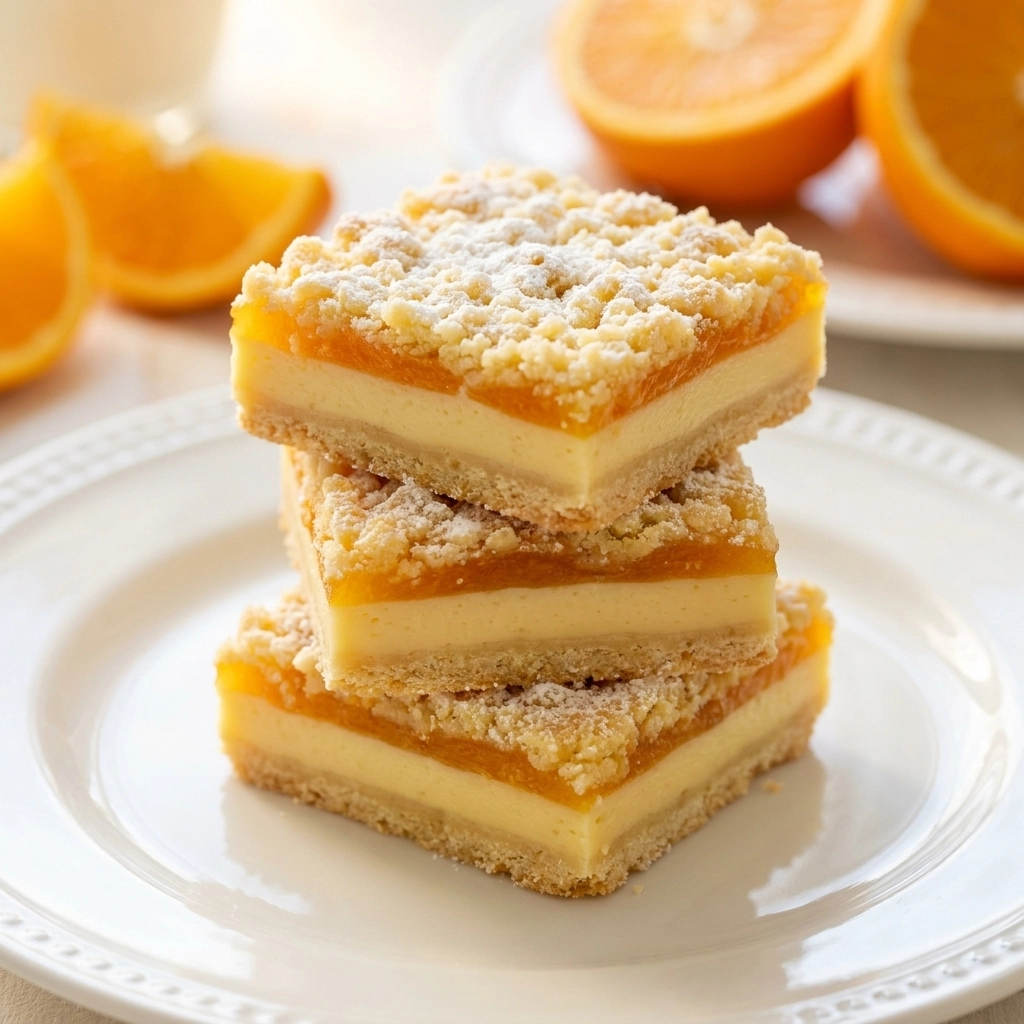
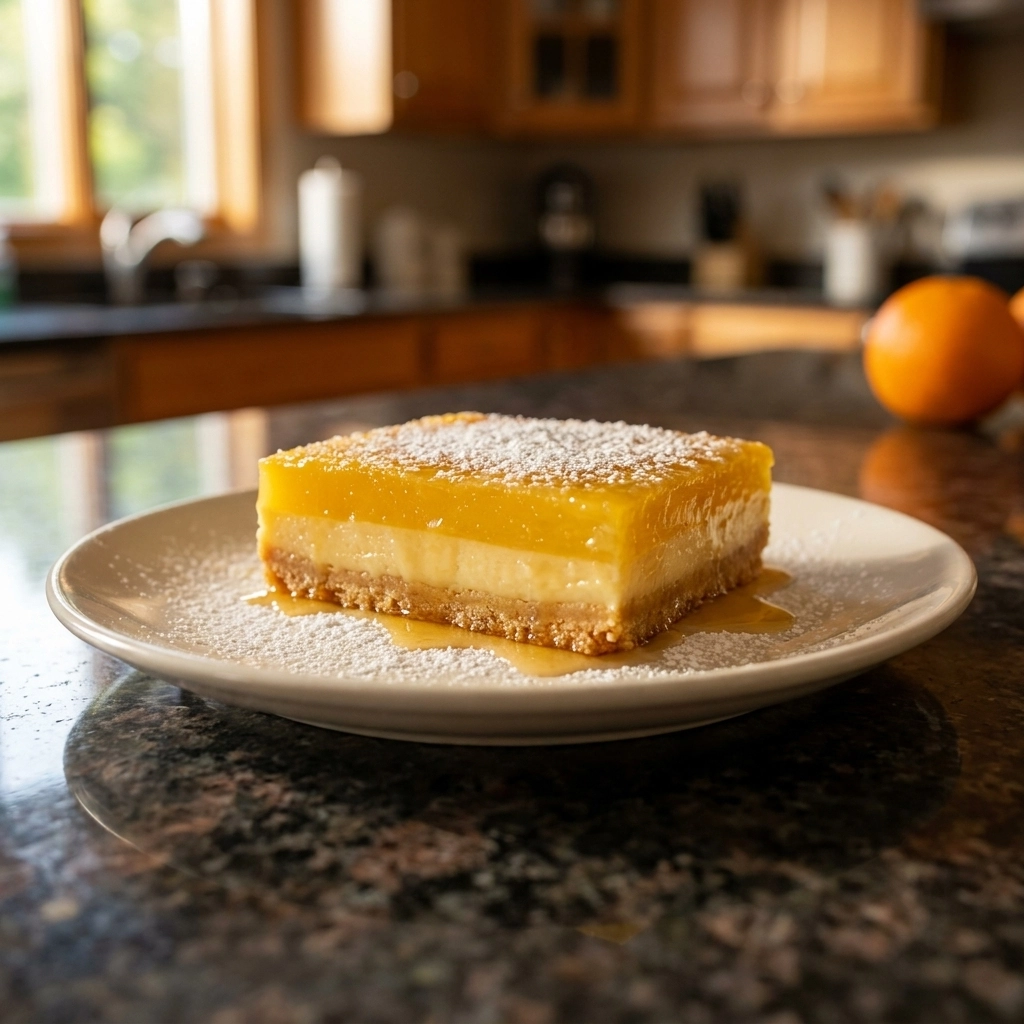
- ●The striking contrast between the crumbly shortbread and the velvet-smooth custard.
- ●A bright, natural citrus punch that cuts through the richness of the cream.
- ●Perfectly portioned sizes that make it an ideal choice for elegant tea parties.
- ●A versatile base that can be adapted for other summer fruits like lemon or lime.
- ●The impressive professional finish that looks like it came from a high-end bakery.
Essential Ingredients |
Unsalted Butter provides the necessary fat for a tender, short crust and a rich mouthfeel in the filling. Substitute with coconut oil for a dairy-free alternative.
Fresh Orange Zest delivers the essential aromatic oils that create a deep, floral citrus profile. Use lemon zest if you prefer a sharper, more acidic tone.
Freshly Squeezed Orange Juice acts as the primary liquid base, providing both sweetness and the signature color. Unsweetened apple juice mixed with a drop of orange extract works in a pinch.
Cornstarch is the thickening agent that ensures the custard sets firmly enough to slice into clean squares. Arrowroot powder is a great gluten-free substitute.
Large Eggs provide the protein structure and emulsification required for a silky, stable custard. Flax eggs can be used for vegan versions, though the texture will vary.
Granulated Sugar balances the acidity of the oranges and helps the crust caramelize slightly. Maple syrup provides a deeper, earthier sweetness.
 Let’s Make it Together |
- To ensure a uniform base, cream the butter and sugar until fluffy before folding in the flour to create the shortbread crust.
- To prevent the crust from shrinking, press the dough firmly into the corners of a parchment-lined pan and chill for 30 minutes.
- To achieve a golden exterior, bake the crust at 350°F for 15 minutes until the edges are just starting to brown.
- To avoid lumps in the filling, whisk the cornstarch into the sugar before slowly incorporating the orange juice and eggs.
- To ensure the custard doesn’t curdle, temper the egg mixture by adding a small amount of heated juice before pouring it all into the pot.
- To achieve a perfect set, pour the thickened custard over the pre-baked crust and bake for another 20 minutes until the center jiggles only slightly.
Always use room temperature eggs to ensure a smooth emulsion.
Avoid over-mixing the crust or it will become tough.
Zest the oranges before juicing them for maximum efficiency.
Sift your cornstarch to remove any stubborn clumps.
Cool the squares completely before slicing for clean edges.
Perfecting the Cooking Process |
Precision in temperature is the difference between a custard and an omelet. The custard must be heated to exactly 175°F to ensure the starches gelatinize without breaking the egg proteins. Use a digital thermometer to monitor the heat constantly. Slow and steady is the rule here.
The science of the “jiggle” is paramount. When removing the pan from the oven, the edges should be set and matte, but the center two inches should wobble like gelatin. This residual heat continues to cook the center as it cools, preventing the custard from becoming rubbery or over-baked. Accuracy is everything.
For the crust, the 30-minute chill period is not optional. Cold fat creates steam pockets during baking, which results in a flaky, tender texture. If the butter is too warm, the crust will slump. Keep it cold. This ensures a structural foundation that can support the heavy custard filling.
Add Your Touch |
Consider adding a layer of raspberry jam to the bottom of the crust for a fruity contrast. The tartness of the berries complements the citrus notes beautifully. It adds a vibrant red streak to each slice.
Try topping the finished squares with a dollop of whipped mascarpone and a sliver of candied orange peel. This adds a layer of sophisticated creaminess. It elevates the dish from a simple square to a plated dessert.
Storing & Reheating |
Store these squares in an airtight container in the refrigerator for up to four days. Keep them covered with parchment paper between layers to prevent sticking. The cold temperature actually enhances the flavor of the orange.
Do not reheat these in a microwave, as the custard may separate. Instead, allow them to sit at room temperature for 20 minutes before serving. This restores the softness of the crust while keeping the filling cool.
1Use a hot knife dipped in water to get professional slices.
2Squeeze the orange juice fresh for the best aromatic result.
3Line your pan with parchment that overhangs the sides for easy lifting.
4Whisk the custard on medium-low heat to avoid scorching the bottom.
5Add a pinch of salt to the crust to balance the sweetness.
FAQ |
- ●Q: Why is my custard too soft to slice?A: This usually happens if the cornstarch wasn’t fully activated or the bake time was too short. Ensure the custard reaches the proper thickness on the stove before baking and let it cool completely in the fridge for at least 4 hours to set the structure.
- ●Q: Can I use bottled orange juice instead of fresh?A: While you can, bottled juice lacks the bright, volatile oils found in fresh fruit. Fresh juice provides a more complex flavor profile and a more vibrant color, which is essential for the “Summer Bliss” aesthetic of this specific recipe.
- ●Q: How do I prevent the crust from getting soggy?A: Pre-baking the crust is the secret. This creates a seal on the surface of the dough, preventing the moisture from the custard from seeping into the pastry, which keeps the base crisp and buttery even after refrigeration.
- ●Q: What is the best way to zest an orange without the bitter skin?A: Use a microplane and glide it lightly across the surface. Stop as soon as you hit the white pith, which is where the bitterness resides. The goal is to only collect the bright orange outer layer of the peel.
Irresistible Orange Custard Squares Recipe for Summer Bliss
- Total Time: 1 hour 20 minutes
- Yield: 12 squares 1x
Description
A sophisticated summer dessert featuring a buttery shortbread crust topped with a silky, zesty orange custard filling.
Ingredients
- 1 cup unsalted butter, softened
- 1/2 cup granulated sugar
- 2 cups all-purpose flour
- 1 tbsp orange zest
- 1 cup fresh orange juice
- 3 large eggs
- 1/3 cup cornstarch
- 1/2 cup granulated sugar for filling
Instructions
- Cream butter and sugar, then mix in flour and zest to form the crust.
- Press dough into a lined pan and chill for 30 minutes.
- Bake crust at 350F for 15 minutes until lightly golden.
- Whisk cornstarch and sugar, then add eggs and orange juice.
- Thicken the custard over medium-low heat until smooth.
- Pour custard over the pre-baked crust and bake for 20 more minutes.
- Cool completely and refrigerate before slicing into squares.
- Prep Time: 45 minutes
- Cook Time: 35 minutes
- Category: Dessert
- Method: Baking
- Cuisine: French-inspired