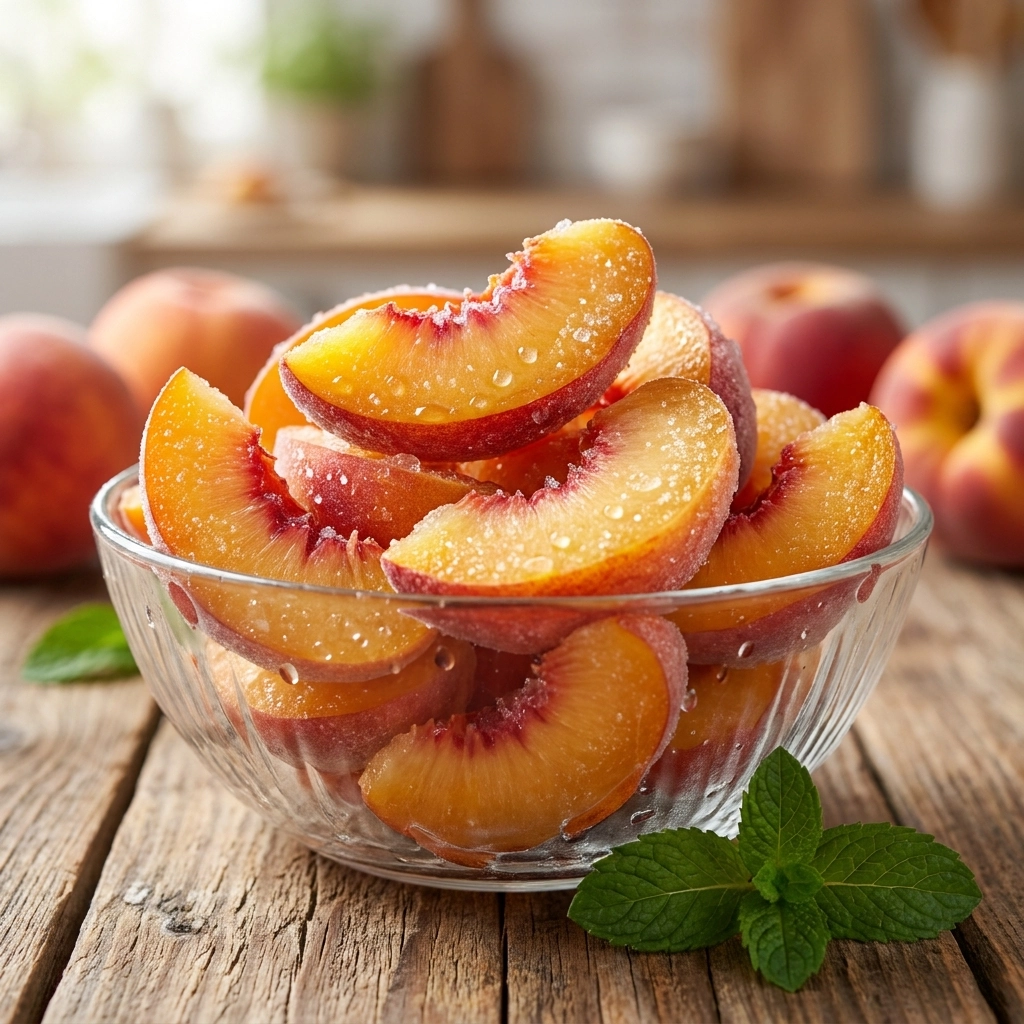
The Art of Preserving Summer’s Gold |
I remember a humid August afternoon years ago when my kitchen counter was overflowing with crates of local Georgia peaches. The scent was intoxicating, but the sheer volume of fruit was overwhelming, and I watched in heartbreak as several beautiful peaches turned a muddy brown within hours. This failure sparked a technical obsession with enzymatic browning and the precise chemistry required to halt the oxidation process while maintaining the fruit’s structural integrity.
The golden warmth of late summer is the only time to execute this process, as the sugars in the fruit are at their peak concentration. balance of acidity and temperature, we can effectively pause the clock on these delicate drupes. I have spent seasons refining this method to ensure that when you thaw a slice in January, it tastes exactly like a sunny July afternoon.
- ●Prevents oxidation and unappealing brown discoloration completely.
- ●Maintains the firm texture of the fruit, avoiding a mushy consistency.
- ●Preserves the natural, peak-season flavor for off-season baking.
- ●Uses minimal additives to keep the fruit tasting fresh and natural.
- ●Provides a versatile base for smoothies, tarts, and preserves.
Essential Ingredients |
Fresh Peaches contain an enzyme called polyphenol oxidase that reacts with oxygen to create brown pigments. You need these at peak ripeness to ensure the natural sugar levels are high enough to protect the fruit’s flavor profile during the freeze.
Lemon Juice is a potent source of citric acid, which lowers the pH level of the fruit’s surface. This acidity inhibits the browning enzymes from functioning, acting as a chemical shield for the peach flesh.
Filtered Water possesses a surprising ability to dilute the acidity just enough so the lemon doesn’t overpower the delicate peach aroma. It creates a balanced solution that coats the fruit evenly without leaving a sour residue.
Ascorbic Acid (Optional) is a pure form of Vitamin C that is even more effective than lemon juice at preventing oxidation. It works to oxygen molecules before they can react with the fruit’s phenols.
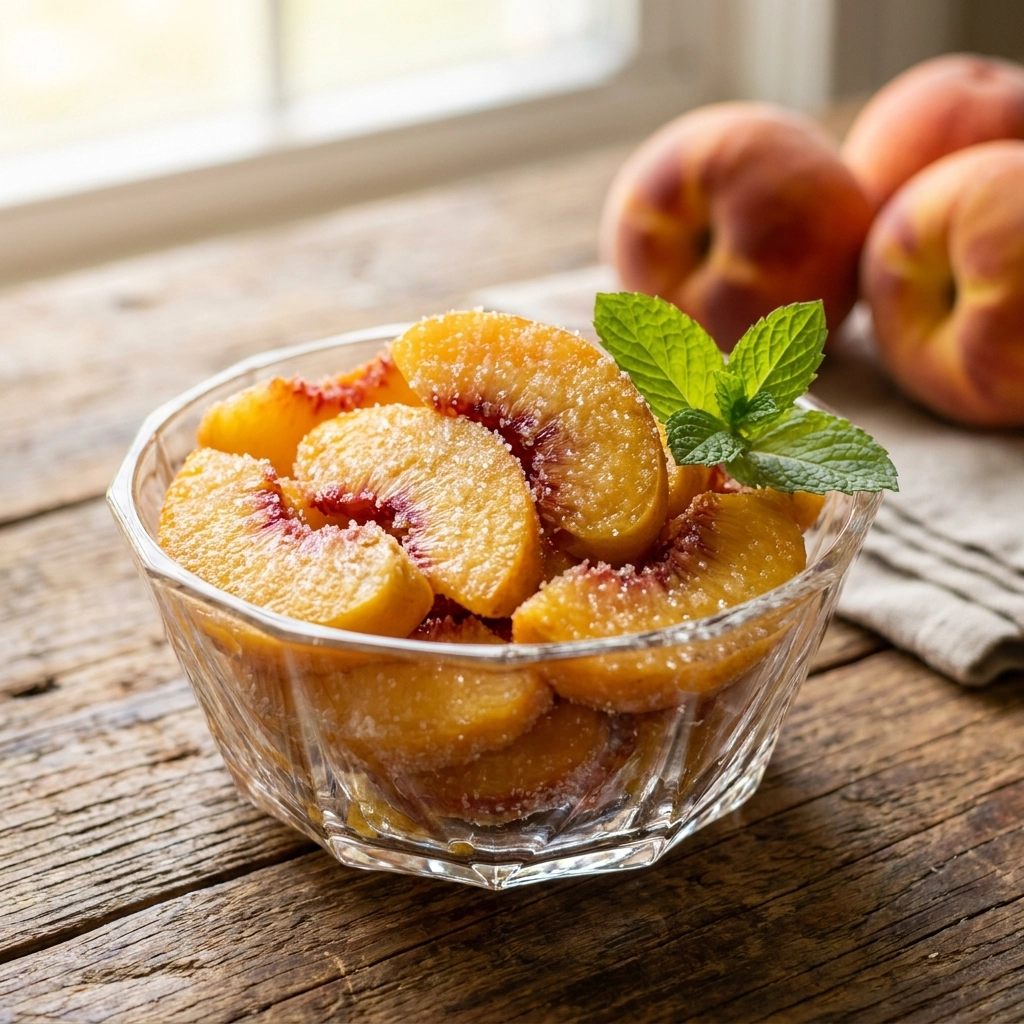 Let’s Make it Together |
- Prepare a blanching bath by bringing a large pot of water to a rolling boil. Dip the peaches in for exactly 30 seconds until the skin slightly loosens, then plunge them into ice water to stop the cooking. Avoid over-boiling, or the fruit will become soft and lose its shape.
- Remove the skins your thumb under the loosened peel. The skin should slip off in large pieces, leaving the flesh smooth and unmarred. Do not use a vegetable peeler, as it removes too much of the nutrient-rich flesh.
- Slice the peaches into uniform wedges, removing the pit carefully. Your knife should glide through the fruit with minimal pressure to prevent bruising. Avoid cutting the pieces too thin, as they may collapse during the thawing process.
- Mix one tablespoon of lemon juice with two cups of filtered water in a large bowl. Submerge the slices completely, ensuring no piece is left exposed to the air. You’ll notice the water turning a pale yellow as the solution interacts with the fruit.
- Arrange the slices on a parchment-lined baking sheet in a single layer. Ensure the pieces are not touching to prevent them from freezing into one giant block. A common mistake is crowding the pan, which leads to uneven freezing.
- Place the tray in the freezer for 4 to 6 hours until the slices are completely rigid. Once frozen, transfer them into an airtight vacuum-seal bag or freezer-safe container. This flash-freezing step is non-negotiable for maintaining individual slice integrity.
Never freeze peaches with the skins on if you plan to peel them later, as the skins harden and become impossible to remove.
Ensure your freezer is set to 0°F (-18°C) to stop microbial growth and preserve the cellular structure of the fruit.
Always use a vacuum sealer if available to remove all oxygen from the storage bag.
Avoid using store-bought canned peach juice as a substitute for the lemon solution due to high preservative levels.
Do not thaw the peaches completely if you intend to use them in a baked cobbler; add them while still semi-frozen.
Perfecting the Cooking Process |
The science of preventing browning relies on the inhibition of polyphenol oxidase. peaches in a citric acid solution, you lower the pH level below 3.0, which effectively denatures the enzyme. Trust your nose here; the solution should smell lightly citrusy but not pungent, indicating a balanced concentration that won’t alter the peach’s natural sweetness.
Temperature control is the most critical technical aspect of this process. Flash-freezing at -18°C or colder ensures that ice crystals remain small. When ice crystals grow too large—which happens during slow freezing—they puncture the cell walls of the fruit, leading to a mushy, leaking mess upon thawing. Your pan should be chilled slightly before the fruit hits it to accelerate the initial freeze.
The timing of the blanching process is a precise window of exactly 30 to 60 seconds. Any longer and you are essentially cooking the peach, which alters the starch structure and removes the fresh, bright acidity. The goal is merely to break the pectin bond between the skin and the flesh, not to heat the core of the fruit.
Add Your Touch |
You can infuse the freezing solution with a hint of vanilla bean or a cinnamon stick for a pre-seasoned flavor. This is particularly effective if you plan to use the peaches exclusively for desserts like tarts or cakes.
For a more modern, gourmet approach, toss the frozen slices in a mixture of honey and lime juice before the final bag seal. This creates a light glaze that protects the fruit further and adds a complex, zesty sweetness.
Storing & Reheating |
Store your frozen peaches in a heavy-duty freezer bag with all air expelled. Label the bag with the date, as the quality is highest within 8 to 12 months before freezer burn begins to affect the taste.
To reheat or thaw, place the desired amount of peaches in a bowl in the refrigerator overnight. Avoid using a microwave to thaw, as the uneven heating will cause the fruit to collapse and release too much liquid.
1Select peaches that give slightly to gentle pressure but aren’t mushy to the touch.
2Use a serrated knife for the initial cut around the pit to avoid bruising the flesh.
3Always pat the fruit dry slightly after the acid bath before freezing to prevent ice shards.
4Store the bags in the back of the freezer where the temperature is most stable.
5Use a small amount of cornstarch if the peaches release too much juice when thawing for a pie.
FAQ |
- ●Q: Why do my peaches still turn brown after freezing?A: This usually happens because the fruit was not fully submerged in the acid solution or there was too much air left in the storage bag. Oxygen is the enemy here; ensure a tight vacuum seal and a thorough coating of lemon juice to block the enzymatic reaction.
- ●Q: Can I freeze peaches without peeling them?A: While you can, the skins often become tough and leathery after freezing, making them unpleasant to eat. Peeling them first ensures a professional result and a much better texture, especially when using the fruit in smoothies or high-end desserts.
- ●Q: How long do these peaches actually stay fresh in the freezer?A: When stored in a vacuum-sealed bag at 0°F, the peaches will maintain their peak flavor and color for about 10 to 12 months. After a year, you may notice a slight loss in aromatic intensity, though they remain perfectly safe to eat.
- ●Q: Is it possible to use vinegar instead of lemon juice?A: I would strongly advise against this because vinegar introduces a pungent, fermented flavor that clashes with the floral notes of the peach. Citric acid from lemons or limes is the only way to prevent browning without compromising the delicate taste.
Easy Fresh Peaches Freeze Without Browning Perfect Guide to Keep Peaches Fresh Longer
- Total Time: 45 minutes
- Yield: Approx. 4 cups of slices
Description
A professional technique to preserve fresh peaches, preventing enzymatic browning and maintaining a firm texture for year-round use.
Ingredients
- 4–6 ripe fresh peaches
- 1 tablespoon lemon juice
- 2 cups filtered water
- Optional: 1/4 tsp ascorbic acid
Instructions
- Blanch peaches for 30 seconds in boiling water, then shock in ice water.
- Peel the skins off the cooled peaches.
- Slice peaches into uniform wedges and remove pits.
- Submerge slices in a mixture of lemon juice and water for 10 minutes.
- Arrange slices on a parchment-lined tray in a single layer.
- Flash freeze for 4-6 hours, then transfer to an airtight freezer bag.
- Prep Time: 45 minutes
- Cook Time: 0 minutes
- Category: Preservation
- Method: Flash Freezing
- Cuisine: American