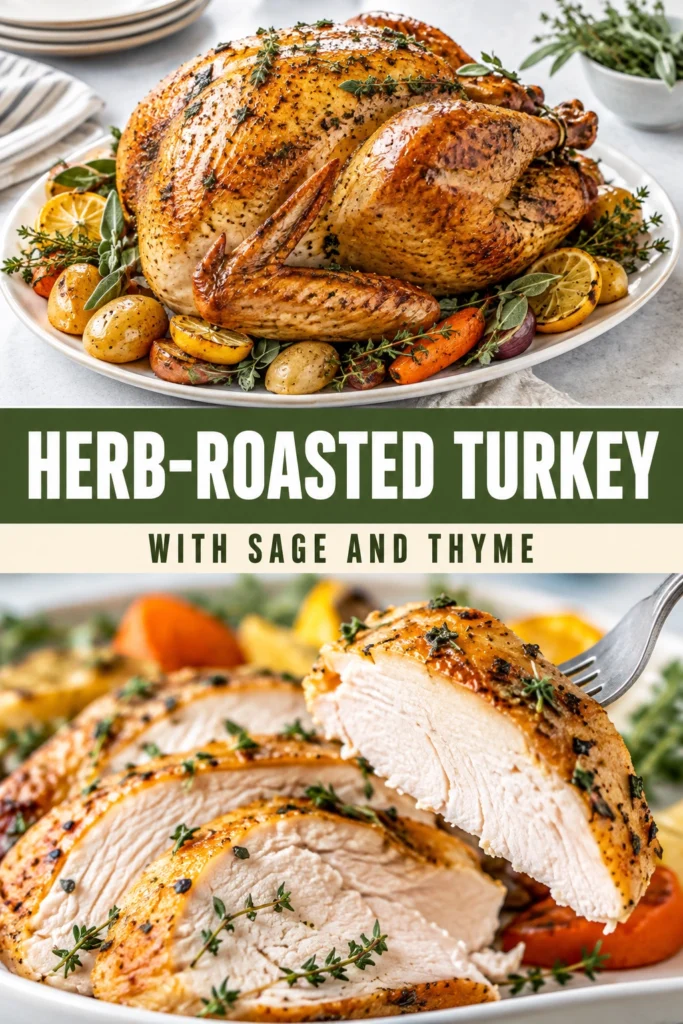
A golden-brown, aromatic turkey serves as the focal point of any festive table, filling the room with a warm, savory scent. This bird is characterized by a crisp skin and tender meat that remains moist throughout.
This recipe focuses on a classic herb-roasted turkey with sage and thyme. It balances the earthy notes of garden herbs with the richness of butter.
Home cooks appreciate this method because it avoids the dryness often associated with large poultry. The combination of an herb-infused butter rub and precise temperature control keeps the breast meat succulent.
What makes this version unique is the heavy emphasis on fresh sage and thyme, which penetrate the skin to season the meat deeply. This creates a more nuanced flavor profile than recipes relying solely on salt and pepper.
Compared to store-bought pre-seasoned birds, this fresh approach allows for total control over sodium and herb intensity. You avoid the artificial preservatives and overly salty brines found in commercial options.
This dish is ideal for those hosting Thanksgiving, Christmas, or any large family gathering where a show-stopping main course is required.
The following guide provides the steps and tips needed to achieve a professional result at home.
- ●Why You’ll Love This Recipe
- ●A Brief Background on the Flavor Profile
- ●Perfect For Holiday Gatherings and Family Feasts
- ●Turkey Ingredient Spotlight
- ●The Role of Fresh Herbs
- ●Key Ingredients
- ●How to Make It
- ●Pro Tips
- ●Delicious Variations
- ●Best Ways to Serve
- ●Storage and Leftovers
- ●Frequently Asked Questions
- ●Why This Recipe Belongs in Your Weekly Rotation
- ●Final Thoughts
This roasting method prioritizes flavor and texture, ensuring the turkey is as delicious as it is visually appealing.
- ●Consistent moisture in the breast meat prevents the common issue of dry turkey.
- ●Fresh sage and thyme provide a sophisticated, earthy aroma.
- ●The butter rub creates a deep, golden-brown skin through caramelization.
- ●Simple preparation steps make it manageable even for novice cooks.
- ●It works well with various turkey sizes, from small birds to large feast-sized options.
- ●The aromatic drippings are ideal for making Turkey Pan Gravy With Garlic Herb Butter Easy Thanksgiving Gravy Recipe
- ●Natural ingredients avoid the metallic taste of some commercial seasonings.
- ●The recipe provides clear visual cues for doneness to remove guesswork.
Once mastered, this approach becomes a reliable tradition that guests look forward to every year.
A Brief Background on the Flavor Profile |
The success of this roast lies in the synergy between fat and aromatics. Butter serves as the delivery vehicle for the herbs, allowing the flavors to adhere to the skin and seep into the muscle fibers during the long roasting process.
Sage offers a slightly peppery, pine-like quality that cuts through the richness of the turkey. Thyme adds a subtle lemony brightness, providing a balanced contrast to the savory meat.
Perfect For Holiday Gatherings and Family Feasts |
This recipe is designed for large-scale celebrations where the meal is the main event. Because it requires a long roasting time, it allows the cook to focus on side dishes and appetizers while the oven does the heavy lifting.
It is particularly well-suited for traditional Thanksgiving or Christmas dinners. The classic herb profile complements typical autumn produce, such as the Maple Roasted Squash With Sage And Butter Easy Autumn Side Dish Recipe
For those who prefer smaller gatherings, the method scales down easily for a smaller turkey, providing a high-end dining experience for a few close friends or family members.
Turkey Ingredient Spotlight |
Whole turkey is the foundation of this meal, providing a lean yet flavorful protein. The combination of white meat in the breast and dark meat in the legs and thighs offers a variety of textures and tastes on one platter.
When selected carefully, a high-quality bird provides the structure needed for a slow roast. The skin acts as a natural barrier, locking in juices while the fat underneath renders to create a crisp exterior.
The Role of Fresh Herbs |
Fresh sage and thyme are non-negotiable for this recipe. Unlike dried herbs, fresh leaves contain volatile oils that release a vibrant, aromatic scent when exposed to heat.
Sage provides a grounding, earthy base that is synonymous with festive roasting. Thyme adds a layer of complexity with its subtle herbal sweetness, preventing the dish from tasting one-dimensional.
Using these herbs both in the butter rub and inside the cavity ensures the bird is seasoned from the inside out, eliminating any bland spots in the meat.
Key Ingredients |
Each component plays a specific role in achieving the final taste and texture of the roast.
- ●Whole Turkey — The primary protein and center of the meal.
- ●Unsalted Butter — Used for the rub to brown the skin and keep meat moist.
- ●Fresh Sage — Adds an earthy, aromatic depth to the seasoning.
- ●Fresh Thyme — Provides a light, herbal brightness.
- ●Garlic — Adds a pungent, savory layer that complements the herbs.
- ●Kosher Salt — Draws out moisture for crispier skin and seasons the meat.
- ●Black Pepper — Provides a subtle heat and sharp contrast to the butter.
- ●Onion — Placed in the cavity to add moisture and flavor from within.
- ●Lemon — Adds acidity to balance the richness of the turkey.
How to Make It |
Precise timing and temperature control are essential to avoid overcooking the breast while ensuring the legs are fully cooked.
- Prepare the turkey: Remove the giblets from the cavity and pat the skin completely dry with paper towels. Moisture on the skin creates steam, which prevents the bird from browning; a dry surface is the only way to achieve a crisp, golden exterior.
- Create the herb butter: Mix softened butter with minced garlic, chopped sage, chopped thyme, salt, and pepper. Using softened rather than melted butter allows you to spread the mixture more evenly under the skin and over the surface.
- Season the cavity: Place a halved onion, a halved lemon, and a few whole sprigs of sage and thyme inside the turkey. These aromatics steam from the inside, infusing the meat with flavor and keeping the interior moist.
- Apply the rub: Gently loosen the skin over the breast meat with your fingers and slide some of the herb butter underneath. Rub the remaining butter all over the exterior. This protects the lean breast meat from the direct heat of the oven.
- Roast at high heat: Start the turkey in a preheated oven at 425F for 30 minutes. This initial blast of heat triggers the Maillard reaction, ensuring the skin starts to brown and crisp immediately.
- Lower the temperature: Reduce the oven heat to 325F for the remainder of the cooking time. Cooking at a lower temperature prevents the outside from burning before the thickest part of the thigh reaches a safe internal temperature.
- Monitor the temperature: Use a meat thermometer in the thickest part of the thigh, avoiding the bone. The turkey is done when the thigh reaches 165F and the breast reaches 160F (it will rise to 165F while resting). Overcooking by even 10 degrees can result in dry meat.
- Rest the meat: Transfer the turkey to a carving board and let it rest for at least 30 to 45 minutes. Cutting into the meat too early allows the juices to run out onto the board rather than staying in the meat.
1Small adjustments during the process can make a significant difference in the final quality of the roast.
- ●2Room Temperature Bird: Let the turkey sit out for about an hour before roasting so it cooks more evenly from the center out.
- ●3Avoid Over-Basting: Opening the oven door too frequently lets heat escape and increases total cooking time; trust the butter rub.
- ●4Use a V-Rack: Elevating the turkey on a rack allows hot air to circulate under the bird, preventing the bottom from becoming soggy.
- ●5Tenting with Foil: If the breast is browning too quickly while the legs are still undercooked, loosely cover the breast with aluminum foil.
- ●6Calibration: Always check your meat thermometer with ice water first to ensure it is accurate before relying on it for food safety.
Delicious Variations |
While the sage and thyme combination is classic, you can adapt the flavor profile to suit different tastes or seasons.
- ●Citrus Twist: Add orange zest to the herb butter for a brighter, sweeter aromatic quality.
- ●Mediterranean Style: Substitute sage for fresh oregano and add a tablespoon of lemon juice to the butter.
- ●Maple Infusion: Brush the skin with a mixture of maple syrup and melted butter during the last 30 minutes of roasting, similar to a Maple Glazed Turkey With Sage And Thyme Easy Thanksgiving Turkey Recipe
- ●Smoky Profile: Incorporate a pinch of smoked paprika into the rub for a subtle campfire flavor.
- ●Garlic Heavy: Increase the garlic amount and roast whole cloves in the pan around the bird for a more pungent taste.
These variations allow you to move beyond the traditional while keeping the core roasting technique intact.
Best Ways to Serve |
A roast turkey is a substantial dish that requires balanced side components to complete the meal.
- ●Serve alongside Mouthwatering Garlic Herb Roasted Potatoes Veggies for a cohesive flavor profile.
- ●Pair with a creamy Roasted Squash Soup With Sage And Roasted Garlic Cozy Autumn Soup Recipe as a starter.
- ●Accompany with a traditional stuffing or wild rice pilaf to soak up the herb butter.
- ●Offer a tart cranberry sauce or roasted carrots to provide acidity and sweetness.
Carve the turkey into thick slices of breast meat and separate drumsticks to ensure every guest gets a mix of white and dark meat. Arrange the pieces on a large platter garnished with the roasted herbs from the cavity.
Pouring warm gravy over the carved slices immediately before serving keeps the meat moist and ties the herbs of the turkey to the rest of the meal.
Storage and Leftovers |
Refrigerating
Store leftover turkey in airtight containers in the refrigerator for up to 3 to 4 days. Keep the white and dark meat separate if possible to maintain different moisture levels.
Reheating
To prevent the meat from drying out during reheating, place slices in a baking dish with a splash of broth or gravy. Cover with foil and heat at 325F until warmed through, usually about 15 to 20 minutes.
Freezing
Freeze cooked turkey pieces in vacuum-sealed bags or heavy-duty freezer bags for up to 3 months. Thaw slowly in the refrigerator overnight before reheating to preserve the texture.
Frequently Asked Questions |
- ●Q: How do I know when the turkey is actually done?A: Rely on a digital meat thermometer rather than a pop-up timer. Insert the probe into the thickest part of the thigh, ensuring you do not hit the bone, which can give a false high reading. The turkey is safe and juicy when the thigh reaches 165F.
- ●Q: Can I roast a frozen turkey?A: No, you must thaw the turkey completely in the refrigerator before roasting. Roasting a frozen bird leads to uneven cooking, where the outside is overdone and the inside remains raw. A large turkey can take 3 to 4 days to thaw safely.
- ●Q: Why is my turkey skin not getting crispy?A: The most common cause is excess moisture on the skin or overcrowding the pan. Ensure the skin is patted dry before adding the butter and use a roasting rack to allow air to circulate around the entire bird.
- ●Q: What should I do if the breast is browning too fast?A: If the breast skin is dark but the internal temperature is still low, loosely cover the breast area with a piece of aluminum foil. This reflects the heat and slows the browning process, allowing the legs more time to cook.
- ●Q: Do I need to brine my turkey for this recipe?A: While brining is an option, this recipe uses a heavy herb-butter rub and a slow-roasting method to maintain moisture. If you choose to brine, ensure the skin is dried thoroughly before applying the butter to avoid a soggy exterior.
- ●Q: Can I use dried herbs if I cannot find fresh ones?A: You can use dried herbs, but the flavor will be less vibrant. Use approximately one-third of the amount of dried herbs compared to fresh. However, for the best aromatic result, fresh sage and thyme are highly recommended.
Why This Recipe Belongs in Your Weekly Rotation |
While whole turkey is typically reserved for holidays, the principles of this herb roast can be applied to smaller birds or chicken throughout the year. Mastering this technique removes the anxiety surrounding large-scale roasting, making it a confident addition to your culinary repertoire.
The use of fresh herbs provides a nutritional boost and a level of flavor that processed seasonings cannot match. It transforms a simple protein into a sophisticated meal that feels special regardless of the date on the calendar.
Final Thoughts |
This herb-roasted turkey combines the earthy richness of sage and thyme with a precise roasting technique to produce a tender, golden-brown bird. skin preparation and temperature control, the recipe avoids the dryness common in large roasts.
Whether you are hosting a traditional holiday feast or simply want to impress guests with a classic main course, this method provides a consistent and professional result. The balance of flavors and textures makes it a crowd-pleasing centerpiece.
Bring your table together with a roast that smells as wonderful as it tastes.
Herb-Roasted Turkey with Sage and Thyme
- Total Time: 0 hours
- Yield: 12 servings 1x
Description
A classic holiday roast featuring an aromatic sage and thyme butter rub for crisp skin and succulent meat. Perfect for Thanksgiving or Christmas dinners.
Ingredients
- 12–14 lb whole turkey, thawed
- 1 cup unsalted butter, softened
- 2 tablespoons fresh sage, finely chopped
- 2 tablespoons fresh thyme, finely chopped
- 4 cloves garlic, minced
- 2 tablespoons kosher salt
- 1 tablespoon black pepper
- 1 medium onion, halved
- 1 lemon, halved
- 4 sprigs fresh sage
- 4 sprigs fresh thyme
Instructions
- Preheat oven to 425F. Remove giblets and pat the turkey skin completely dry with paper towels.
- In a small bowl, combine softened butter, minced garlic, chopped sage, chopped thyme, salt, and pepper until smooth.
- Place the halved onion, halved lemon, and whole herb sprigs inside the turkey cavity.
- Gently lift the skin over the breast and spread a portion of the herb butter underneath. Rub the remaining butter over the entire exterior of the bird.
- Place turkey on a V-rack in a roasting pan. Roast at 425F for 30 minutes.
- Reduce oven temperature to 325F. Continue roasting until a meat thermometer reaches 165F in the thickest part of the thigh and 160F in the breast.
- Remove turkey from the oven and transfer to a carving board.
- Let the turkey rest for 30 to 45 minutes before carving to allow juices to redistribute.
- Prep Time: 30 minutes
- Cook Time: 3 to 4 hours
- Category: Main Course
- Method: Roasting
- Cuisine: American