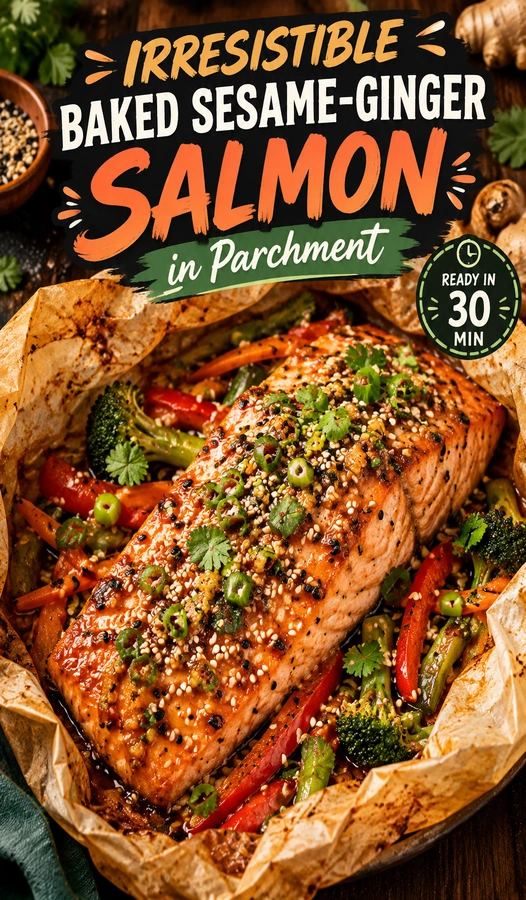
The sharp zing of fresh ginger paired with the nutty depth of toasted sesame oil creates a profile that cuts through the natural richness of salmon. This combination works because the acidity and aromatics balance the fatty acids of the fish.
This recipe uses the en papillote method, which means cooking the fish inside a folded parchment paper pouch. This technique traps steam and aromatics, keeping the fillet incredibly moist.
Many people prefer this over traditional pan-searing because it eliminates the risk of drying out the fish. The salmon poaches in its own juices and the marinade.
It provides a clean, sophisticated flavor that mimics high-end restaurant quality without the need for complex equipment or hours of prep.
This meal is an ideal choice for someone who wants a nutrient-dense dinner but dislikes the tedious process of scrubbing baking sheets afterward.
It fits perfectly into a Tuesday night dinner routine when you need a healthy meal that requires very little active attention. Follow these steps to master the art of parchment baking.
- ●Why You’ll Love This Recipe
- ●A Brief Background / Why This Recipe Works
- ●Perfect For Healthy Weeknight Dinners
- ●Salmon Spotlight
- ●Ginger and Sesame Focus
- ●Key Ingredients
- ●How to Make It
- ●Pro Tips
- ●Delicious Variations
- ●Best Ways to Serve
- ●Storage and Leftovers
- ●Frequently Asked Questions
- ●Why This Recipe Belongs in Your Weekly Rotation
- ●Final Thoughts
This method of cooking salmon provides several practical and culinary advantages that make it a staple for any home cook.
- ●The parchment pouches lock in moisture, making it nearly impossible to overcook the fish.
- ●Prep time is minimal since the oven does most of the heavy lifting.
- ●Cleanup is effortless because the fish never actually touches the baking pan.
- ●Fresh ginger and sesame oil infuse the fish deeply during the steaming process.
- ●It is a naturally low-calorie meal that remains satisfying.
- ●The individual pouches make it easy to customize flavors for different family members.
- ●It creates a visually appealing presentation when the pouch is opened at the table.
- ●The aromatic steam released upon opening the paper is a sensory highlight of the meal.
These benefits combine to create a stress-free dining experience that focuses on fresh, bold flavors.
A Brief Background / Why This Recipe Works |
Cooking en papillote is a classic French technique that uses a sealed pouch to create a miniature steam oven. Because the salmon is sealed away from direct dry heat, the proteins do not contract as sharply, resulting in a buttery, tender flake.
The ingredients used here are chosen for their ability to penetrate the flesh of the salmon. Ginger contains enzymes that tenderize the fish, while the viscosity of the soy and honey glaze clings to the fillet, creating a concentrated sauce as it cooks.
Unlike Quick Flavorful Oven Baked Salmon In 15 Minutes, which relies on direct heat for a faster finish, this parchment method prioritizes a slower, more controlled infusion of flavors.
The result is a dish that tastes steamed yet carries the richness of a roasted fillet.
Perfect For Healthy Weeknight Dinners |
This recipe is designed for the chaos of a busy week. Since the assembly takes only a few minutes, it fits easily between work and bedtime routines.
It also works well for meal prep. You can assemble the parchment pouches in advance and keep them in the fridge, popping them into the oven the moment you get home.
For family dinners, these pouches allow you to slide in a few extra vegetables like snap peas or carrots, turning a single protein into a complete meal in one package.
During holidays or small gatherings, the individual presentation makes the meal feel curated and intentional without requiring the cook to spend the entire evening in the kitchen.
Salmon Spotlight |
Salmon is the ideal candidate for parchment baking due to its high omega-3 content and healthy fats. These fats prevent the fish from sticking to the paper and help conduct heat evenly throughout the fillet.
The meaty texture of salmon stands up well to the strong flavors of ginger and soy. When steamed, the orange-pink flesh becomes translucent and tender, absorbing the savory glaze more effectively than it would during high-heat grilling.
Ginger and Sesame Focus |
Fresh ginger provides a pungent, peppery warmth that balances the sweetness of the honey. Using fresh ginger instead of powdered ensures a bright, citrusy note that elevates the entire dish.
Toasted sesame oil adds a deep, roasted aroma that provides the “umami” foundation. It mimics the flavor of a stir-fry but delivers it through a gentle steaming process.
Together, these two ingredients create an Asian-inspired profile that transforms a simple piece of fish into a complex culinary experience.
Key Ingredients |
Each component of this recipe serves a specific purpose in building the flavor profile and ensuring the correct texture.
- ●Salmon Fillets — The primary protein, chosen for its rich flavor and ability to stay moist under steam.
- ●Fresh Ginger — Adds a spicy, aromatic heat; can be swapped for ginger paste in a pinch.
- ●Toasted Sesame Oil — Provides a nutty, savory base that defines the aroma of the dish.
- ●Soy Sauce — Delivers salt and depth; use tamari or coconut aminos for a gluten-free alternative.
- ●Honey — Adds a touch of sweetness to balance the salt and helps the glaze thicken.
- ●Garlic — Adds a sharp, savory punch that complements the ginger.
- ●Lemon Slices — Provides acidity to brighten the flavors and prevents the fish from tasting too heavy.
- ●Green Onions — Used for a fresh, mild onion finish and a pop of color.
How to Make It |
Follow these steps carefully to ensure the pouches are sealed correctly and the salmon is cooked to a perfect medium.
- Prep the oven and pans: Preheat your oven to 375F (190C) and line a large baking sheet with parchment paper or foil. A properly heated oven is necessary to create the steam required to puff up the pouches.
- Create the marinade: In a small bowl, whisk together the soy sauce, honey, toasted sesame oil, minced garlic, and grated ginger. Mixing these first ensures the honey is fully dissolved and the flavors are evenly distributed.
- Cut the parchment: Cut two large squares of parchment paper, approximately 12 by 12 inches. If the paper is too small, you will not be able to fold the edges tightly enough to trap the steam.
- Assemble the base: Place each salmon fillet in the center of a parchment square. If you are adding sliced vegetables, place them underneath the fish so they steam in the salmon’s juices.
- Apply flavors: Spoon the marinade evenly over each fillet and top with a slice of lemon. The lemon slice protects the top of the fish from drying and infuses the meat with citrus.
- Seal the pouches: Fold the paper over the fish and crimp the edges tightly, twisting the ends to create a sealed envelope. If the pouch leaks, the steam escapes, and the fish will bake rather than steam, resulting in a tougher texture.
- Bake the salmon: Place the pouches on the baking sheet and bake for 12 to 15 minutes depending on the thickness of the fillet. Avoid opening the pouches prematurely, as this releases all the accumulated heat and steam.
- Rest and serve: Remove from the oven and let the pouches sit for 2 minutes. This allows the internal temperature to stabilize and ensures the sauce has thickened slightly.
1Small adjustments in technique can significantly improve the final result of your baked salmon.
- ●2Use a Microplane: Grate the ginger and garlic using a fine zester to avoid large chunks that can be unpleasant to bite into.
- ●3Pat the fish dry: Use a paper towel to dry the salmon before adding the marinade to help the sauce adhere better to the surface.
- ●4Check thickness: If your fillets are thinner than one inch, reduce the baking time by 2 to 3 minutes to prevent overcooking.
- ●5Avoid over-filling: Do not add too many vegetables to the pouch, or the salmon will be crowded and won’t cook evenly.
- ●6Double check the seal: If the parchment paper is difficult to fold, you can use a small piece of kitchen twine to tie the pouch shut.
Delicious Variations |
You can easily adapt this recipe to suit different dietary needs or flavor preferences.
- ●Maple Glaze: Replace the honey with pure maple syrup for a deeper, more earthy sweetness.
- ●Spicy Kick: Stir a teaspoon of Sriracha or red chili flakes into the marinade for added heat.
- ●Citrus Twist: Swap the lemon slices for lime slices and add a pinch of lime zest for a brighter, tropical flavor.
- ●Veggie-Packed: Add a bed of ba thinly sliced bok choy inside the pouch.
- ●Nutty Crunch: Garnish the finished fish with toasted sesame seeds or crushed peanuts after opening the pouch.
These variations allow you to rotate the flavor profile while keeping the effortless cooking method.
Best Ways to Serve |
Because the salmon produces its own concentrated sauce, you want sides that can absorb that liquid.
- ●Steamed Jasmine Rice: The classic choice for soaking up the sesame-ginger glaze.
- ●Quinoa or Farro: A heartier, nuttier alternative that adds more texture to the plate.
- ●Sautéed Broccolini: The slight bitterness of the greens balances the sweetness of the honey.
- ●Fresh Cucumber Salad: A cold, vinegary salad provides a refreshing contrast to the warm, rich fish.
For a more formal presentation, leave the pouches closed and place them directly on the dinner plates. Allow guests to cut them open at the table to enjoy the aromatic steam.
If you prefer a different protein, this same method works well for white fish like cod or halibut, though you may need to adjust the cooking time based on the thickness of the fillet. You might also enjoy the Crunchy Pistachio Baked Salmon With A Honey Lemon Glaze Easy Healthy Dinner Idea for a version with more texture.
Storage and Leftovers |
Refrigerating
Store leftover cooked salmon in an airtight glass container. It will remain fresh in the refrigerator for up to 3 days. To prevent the fish from drying out, drizzle a little extra olive oil or lemon juice over the fillet before sealing the lid.
Reheating
Avoid the microwave, as it often makes salmon rubbery. Instead, place the fillet in a toaster oven or oven at 250F (120C) for 5 to 8 minutes. This gentle heat warms the fish through without overcooking the center.
Freezing
Cooked salmon can be frozen for up to 2 months. Wrap the fillets tightly in foil and then place them in a freezer-safe bag. Thaw overnight in the refrigerator before reheating in the oven to maintain the best possible texture.
Frequently Asked Questions |
- ●Q: Can I use frozen salmon for this recipe?A: Yes, you can use frozen salmon, but it must be completely thawed in the refrigerator before you begin. If you cook it from frozen, the fish will release too much water, which will dilute the marinade and prevent the pouch from steaming correctly.
- ●Q: What if I do not have parchment paper?A: You can use aluminum foil as a substitute. While foil does not breathe quite like parchment, it still creates an effective seal for steaming. Just be cautious when opening the foil, as it can have sharper edges than paper.
- ●Q: How do I know when the salmon is perfectly cooked?A: The salmon is done when the flesh turns opaque and flakes easily with a fork. If you have a meat thermometer, look for an internal temperature of 145F (63C), though many prefer it at 135F for a more moist center.
- ●Q: Can I use a different type of oil instead of toasted sesame oil?A: You can use a neutral oil like canola or avocado oil, but you will lose the signature nutty flavor. To compensate, you might consider adding a teaspoon of toasted sesame seeds to the marinade to bring back some of that depth.
- ●Q: Is it possible to make this recipe in an air fryer?A: Yes, you can use an air fryer, but you must ensure the parchment paper is weighted down . If the paper flies up into the heating element, it could catch fire. Set the air fryer to 375F and cook for 10 to 12 minutes.
Why This Recipe Belongs in Your Weekly Rotation |
Adding this dish to your routine solves the common struggle of finding a dinner that is both healthy and flavorful without requiring a mountain of dishes. The efficiency of the parchment pouch method makes it a sustainable choice for anyone with a busy schedule.
The nutritional balance of omega-3 fatty acids, lean protein, and fresh aromatics supports a healthy diet. It proves that “healthy” does not have to mean bland or repetitive.
Final Thoughts |
This sesame-ginger salmon combines the elegance of French steaming techniques with the bold, savory profiles of Asian cuisine. It delivers a tender, juicy fillet every time, regardless of your skill level in the kitchen.
The minimal cleanup and fast preparation make it a logical choice for any night of the week. It is a reliable way to enjoy high-quality seafood without the stress of precise pan-frying or grilling.
Gather your ingredients and experience the satisfying moment of opening that steam-filled pouch tonight.
Irresistible Baked Sesame-Ginger Salmon in Parchment
- Total Time: 30 minutes
- Yield: 2 servings 1x
Description
A tender salmon fillet steamed in a parchment pouch with a savory blend of ginger, sesame oil, and honey for a restaurant-quality meal with minimal cleanup.
Ingredients
- 2 salmon fillets (6 oz each)
- 2 tablespoons soy sauce
- 1 tablespoon honey
- 1 tablespoon toasted sesame oil
- 1 tablespoon fresh ginger, grated
- 2 cloves garlic, minced
- 2 lemon slices
- 1 green onion, thinly sliced
- Parchment paper squares (12×12 inches)
Instructions
- Preheat oven to 375F (190C) and line a baking sheet with parchment paper.
- In a small bowl, whisk together soy sauce, honey, toasted sesame oil, minced garlic, and grated ginger until smooth.
- Place each salmon fillet in the center of a 12-inch square of parchment paper.
- Spoon the marinade evenly over each fillet, ensuring the top and sides are covered.
- Top each fillet with a slice of lemon and a sprinkle of sliced green onions.
- Fold the parchment paper over the fish and crimp the edges tightly, twisting the ends to create a completely sealed pouch.
- Place pouches on the baking sheet and bake for 12 to 15 minutes.
- Remove from oven and let the pouches rest for 2 minutes before carefully opening and serving.
- Prep Time: 15 minutes
- Cook Time: 15 minutes
- Category: Dinner
- Method: Baking
- Cuisine: Asian-inspired