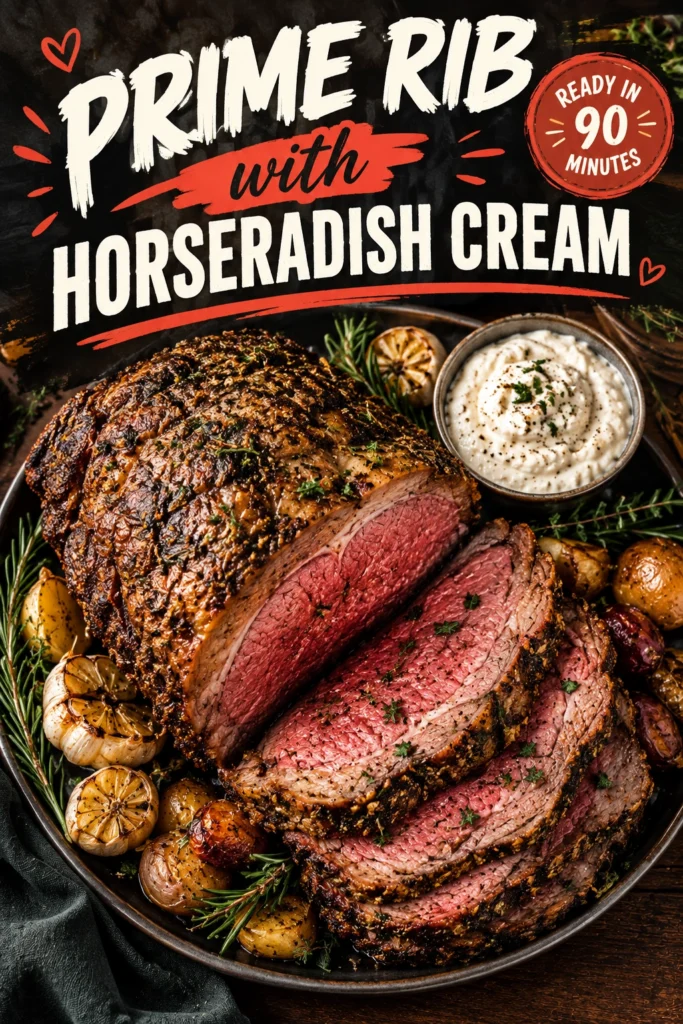
A properly rested roast is the difference between a puddle of juice on the board and a perfectly succulent slice of beef.
Prime rib is a rich, marbled cut of beef that creates a deep, buttery flavor when roasted slowly. This version focuses on a high-heat start and a low-temperature finish to achieve a caramelized crust and a tender center.
Many people avoid this cut because they fear overcooking it or spending too much on a piece of meat that might turn out dry.
The key to success here is the use of a meat thermometer, which removes the guesswork from the process.
Compared to store-bought pre-seasoned roasts, this home-prepared version uses fresh aromatics and a custom horseradish cream that cuts through the richness of the fat.
This meal is designed for those who want a show-stopping centerpiece for a special occasion without spending the entire day trapped in the kitchen.
The following guide breaks down the timing and technique needed to get a restaurant-quality result at home.
- ●Why You’ll Love This Recipe
- ●A Brief Background / Why This Recipe Works
- ●Perfect For Holiday Feasts and Special Occasions
- ●Prime Rib Spotlight
- ●Horseradish and Cream Spotlight
- ●Key Ingredients
- ●How to Make It
- ●Pro Tips
- ●Delicious Variations
- ●Best Ways to Serve
- ●Storage and Leftovers
- ●Frequently Asked Questions
- ●Why This Recipe Belongs in Your Weekly Rotation
- ●Final Thoughts
Cooking a large roast can feel intimidating, but this method simplifies the process while delivering an impressive result.
- ●The reverse-sear logic ensures the meat stays tender from edge to edge.
- ●Horseradish cream provides a sharp contrast to the heavy marbling of the beef.
- ●Prep time is minimal compared to the actual cooking and resting periods.
- ●It scales easily depending on the size of the roast you purchase.
- ●The high-heat crust adds a professional-looking sear to the exterior.
- ●Resting the meat allows the juices to redistribute for maximum tenderness.
- ●It creates a luxurious dining experience that feels like a steakhouse meal.
- ●The ingredients are simple, allowing the quality of the beef to shine.
- ●Leftovers are incredibly versatile for sandwiches the next day.
Whether it is a first-time roast or a yearly tradition, this approach provides a consistent and reliable outcome.
A Brief Background / Why This Recipe Works |
Prime rib comes from the rib primal of the cow, which is naturally tender because the muscles do not do much heavy lifting. The significant intramuscular fat, or marbling, melts during the roasting process, basting the meat from the inside.
The combination of a salt rub and a slow roast prevents the muscle fibers from tightening too quickly. internal temperature carefully, the beef remains juicy and pink throughout the center.
The horseradish cream works because the pungent heat of the root vegetable acts as a palate cleanser. Without a sharp sauce, the richness of the fat can feel overwhelming after a few bites.
Using a roasting rack elevates the meat, allowing hot air to circulate underneath for an even cook on all sides.
Perfect For Holiday Feasts and Special Occasions |
This roast is a natural fit for Christmas, Easter, or New Year’s Eve celebrations. Its presence on the table immediately signals a special event and provides enough food to satisfy a large crowd.
Because the meat can be prepared in advance and requires a long resting period, it frees up the oven for side dishes and appetizers during the final hour of preparation.
It is also an excellent choice for anniversary dinners or milestone birthdays where the goal is a sophisticated, high-protein main course that pairs well with red wine.
Prime Rib Spotlight |
The prime rib is prized for its tenderness and deep beefy flavor. Because it contains a high percentage of fat, it is more forgiving than leaner cuts like sirloin, provided you do not overcook it. When the heat hits the fat, it renders into a liquid that flavors the meat, resulting in a succulent texture that requires very little additional seasoning.
Horseradish and Cream Spotlight |
Prepared horseradish brings a sharp, sinus-clearing heat that is essential for balancing the fat of the roast. When folded into sour cream or crème fraîche, the acidity of the dairy mellows the burn while maintaining a tangy profile.
The texture of the cream should be thick and velvety, providing a cool contrast to the hot, seared crust of the beef. A touch of lemon juice or vinegar enhances the brightness of the sauce.
Key Ingredients |
These components work together to create a balance of savory, salty, and pungent flavors.
- ●Prime Rib Roast — The main protein, chosen for its heavy marbling and tender texture.
- ●Kosher Salt — Used to draw out moisture and create a seasoned crust.
- ●Black Pepper — Adds a woody, spicy bite to the exterior of the meat.
- ●Garlic — Provides a pungent, aromatic base for the rub.
- ●Fresh Rosemary — Adds a piney, herbal fragrance that complements beef.
- ●Fresh Thyme — Offers a subtle, earthy note to the crust.
- ●Sour Cream — The creamy, tangy base for the sauce.
- ●Prepared Horseradish — The primary source of heat and zing in the cream.
- ●Lemon Juice — Adds acidity to brighten the flavors of the sauce.
How to Make It |
Success with prime rib comes down to temperature management and patience during the resting phase.
- Prepare the roast: Remove the beef from the refrigerator two hours before cooking to let it reach room temperature. This prevents the center from remaining cold while the outside overcooks. Pat the meat completely dry with paper towels to ensure the salt adheres and the sear is effective.
- Apply the seasoning: Mix the salt, pepper, minced garlic, and chopped herbs into a paste. Rub this mixture generously over the entire surface of the roast, pressing it into the meat. A common mistake is under-salting; remember that the roast is thick and needs plenty of seasoning on the outside to flavor the interior.
- The initial sear: Preheat the oven to 450°F (230°C). Place the roast on a rack in a roasting pan, fat side up, and roast for 15 to 20 minutes. Look for the fat to begin bubbling and the edges to turn a deep golden brown.
- The slow roast: Lower the oven temperature to 325°F (160°C). Continue roasting until a meat thermometer inserted into the thickest part reaches 120°F (49°C) for medium-rare. Avoid opening the oven door frequently, as this lets out heat and increases the total cooking time.
- The resting period: Transfer the roast to a carving board and tent it loosely with foil. Let it rest for at least 20 to 30 minutes. If you cut into the meat too early, the juices will run out immediately, leaving the meat dry.
- Whisk the cream: While the meat rests, combine the sour cream, prepared horseradish, lemon juice, and a pinch of salt in a bowl. Stir until the texture is smooth and the flavors are fully incorporated. Taste and adjust the horseradish amount based on your heat preference.
1Small adjustments in technique can significantly improve the final texture and flavor of the beef.
- ●2Use a digital probe thermometer: This is the only way to know the exact internal temperature without cutting into the meat.
- ●3Avoid overloading the pan: Ensure there is plenty of space around the roast so the heat can circulate, preventing the sides from steaming.
- ●4Salt early: If possible, salt the roast 24 hours in advance and leave it uncovered in the fridge to dry-brine the meat.
- ●5Carve against the grain: Locate the muscle fibers and cut perpendicular to them to ensure every slice is as tender as possible.
- ●6Check temperature early: Start checking the internal temp about 30 minutes before the estimated time to avoid overshooting your target.
Delicious Variations |
You can tweak the flavor profile of this dish to suit different tastes or dietary preferences.
- ●Blue Cheese Twist: Fold crumbled gorgonzola into the horseradish cream for a bolder, funkier sauce.
- ●Red Wine Reduction: Use the pan drippings to make a rich Succulent Garlic Herb Prime Rib With Au Jus Savory Recipe style sauce.
- ●Dijon Rub: Spread a thin layer of Dijon mustard over the beef before applying the herb rub for extra tang.
- ●Greek-Style: Replace rosemary and thyme with oregano and lemon zest for a Mediterranean profile.
- ●Dairy-Free Cream: Use a cashew-based cream or vegan mayo as the base for the horseradish sauce.
These variations allow you to shift the mood of the meal from traditional to contemporary without changing the core cooking method.
Best Ways to Serve |
The richness of the prime rib pairs best with sides that offer acidity or earthy sweetness.
- ●Creamy mashed potatoes or a loaded potato gratin.
- ●Roasted root vegetables like carrots, parsnips, and turnips.
- ●A crisp arugula salad with a lemon vinaigrette to cut through the fat.
- ●Steamed asparagus or sautéed spinach with a hint of garlic.
For a full holiday spread, place the carved beef on a large platter and surround it with fresh parsley and roasted garlic cloves. Keep the horseradish cream in a separate chilled bowl to maintain its cool temperature.
If you have a sweet tooth, follow this savory feast with a light dessert like Zucchini Caramel Cake With Cream Cheese Buttercream Moist Vegetable Cake Recipe to round out the evening.
Storage and Leftovers |
Refrigerating
Store leftover beef in an airtight container for up to 3 to 4 days. Keep the horseradish cream in a separate sealed jar to prevent it from absorbing the beef flavors.
Reheating
To prevent overcooking, reheat slices in a 250°F oven on a baking sheet with a splash of beef broth, covering with foil until just warmed through.
Freezing
Wrap sliced beef tightly in plastic wrap and then foil, freezing for up to 2 months. Thaw slowly in the refrigerator overnight before reheating.
Frequently Asked Questions |
- ●Q: How do I know when the prime rib is medium-rare?A: Use a digital thermometer to track the internal temperature. Pull the meat from the oven when it hits 120°F to 125°F. The temperature will rise another 5 to 10 degrees during the resting period, bringing it to the perfect 130°F to 135°F range.
- ●Q: Can I use a different cut of beef if prime rib is too expensive?A: A ribeye roast is the same cut and works perfectly. If you need a cheaper option, a top sirloin roast can be used, though it has less fat and requires a shorter cooking time to avoid becoming tough or dry.
- ●Q: My horseradish cream is too spicy; how can I fix it?A: You can mellow the heat sour cream or a tablespoon of mayonnaise. A small pinch of sugar or a drizzle of honey also helps balance the pungent heat of the horseradish root.
- ●Q: Why is my roast grey on the outside instead of brown?A: This usually happens if the meat was too wet when it went into the oven or if the oven temperature was too low. Ensure you pat the beef dry and start with a high-heat sear to create the Maillard reaction.
- ●Q: Do I really need to let the meat rest for 30 minutes?A: Yes, resting is critical for a large roast. During cooking, the juices are pushed to the center; resting allows them to flow back to the edges. Cutting too soon results in all the moisture spilling onto the board.
Why This Recipe Belongs in Your Weekly Rotation |
While a prime rib might not be a Tuesday night meal, having a reliable method for it removes the stress from your special event calendar. It transforms a daunting task into a manageable process that consistently produces high-end results.
The ability to create a restaurant-quality roast at home saves a significant amount of money compared to steakhouse prices, especially when serving a large group of people.
Mastering this dish gives you the confidence to handle any large piece of meat, from brisket to pork shoulder, because you understand the relationship between temperature, searing, and resting.
Final Thoughts |
Prime rib with horseradish cream is a study in balance, combining a buttery, herb-crusted beef roast with a sharp, cooling sauce. It is a timeless combination that prioritizes quality ingredients and patient technique over complex gadgets.
Taking the time to let the meat reach room temperature and resting it after the roast ensures that every guest enjoys a tender, juicy slice. The simplicity of the preparation makes it an accessible luxury for any home cook.
Bring a touch of elegance to your next gathering and treat your guests to this classic, savory masterpiece.
Prime Rib with Horseradish Cream
- Total Time: 3 hours
- Yield: 6-8 servings 1x
Description
A succulent, herb-crusted prime rib roast served with a zesty, cool horseradish cream sauce. Perfect for holidays and special occasions.
Ingredients
- 4–5 lb Prime Rib Roast
- 3 tbsp Kosher salt
- 1 tbsp Black pepper
- 4 cloves Garlic, minced
- 1 tbsp Fresh rosemary, chopped
- 1 tbsp Fresh thyme, chopped
- 1 cup Sour cream
- 1/3 cup Prepared horseradish
- 1 tbsp Lemon juice
- 1/2 tsp Salt (for cream)
Instructions
- Remove roast from fridge 2 hours before cooking. Pat dry with paper towels.
- Mix salt, pepper, minced garlic, rosemary, and thyme into a paste. Rub evenly over the roast.
- Preheat oven to 450°F. Place roast on a rack in a pan, fat side up, and roast for 20 minutes.
- Lower oven temperature to 325°F. Roast until internal temperature reaches 120°F (about 15-20 mins per pound).
- Remove from oven and let rest on a carving board, tented with foil, for 30 minutes.
- Whisk together sour cream, prepared horseradish, lemon juice, and salt in a small bowl.
- Carve the beef against the grain and serve with the horseradish cream on the side.
- Prep Time: 30 minutes
- Cook Time: 2 hours 30 minutes
- Category: Dinner
- Method: Roasting
- Cuisine: American