
Introduction |
Imagine a Tuesday evening in late November, where the air has turned sharp and the windows are frosted with a delicate, icy lace. The house is quiet except for the low hum of the heater, and there is an undeniable craving for something that feels like a warm hug for the soul. This is the exact moment when a simmering pot of cabbage soup becomes less of a meal and more of a sanctuary.
Stepping into the kitchen during the peak of autumn allows you to embrace the earthy scents of root vegetables and slow-cooked greens. There is a certain magic in watching a humble head of cabbage transform from a dense, pale orb into tender, golden ribbons that float in a savory, steaming broth. It is an invitation to slow down, breathe in the garlic-scented steam, and prepare for a cozy night in.
- ●It transforms inexpensive, everyday vegetables into a gourmet-style comfort meal.
- ●The flavor profile evolves and deepens every time you reheat it.
- ●It serves as a versatile canvas for your favorite seasonal additions.
- ●The cooking process is incredibly low-stress and requires minimal cleanup.
- ●It provides a nutrient-dense powerhouse of vitamins in every single ladleful.
Essential Ingredients |
Green Cabbage provides the structural heart and a mild, peppery sweetness that softens as it simmers. Try Savoy cabbage for a more textured, crinkled leaf.
Carrots add a necessary pop of color and a natural, sugary depth to the savory liquid. Parsnips make an excellent earthy alternative.
Celery introduces a salty, aromatic base that anchors the rest of the vegetable flavors. Bok choy stems can be used for a slightly different crunch.
Onion creates a pungent, sweet foundation that ties the broth together. Leeks are a sophisticated substitute for a milder taste.
Garlic delivers an assertive, spicy punch that cuts through the richness of the soup. Shallots offer a more delicate, refined version of this flavor.
Vegetable Broth serves as the liquid gold that extracts flavor from every vegetable. A high-quality mushroom stock can add a deeper, umami-rich dimension.
Diced Tomatoes bring a bright acidity that balances the sweetness of the cabbage. Tomato paste mixed with water works if you prefer a smoother texture.
 Let’s Make it Together |
- To build a deep flavor foundation, heat oil in a large pot over medium heat and sauté the onions, carrots, and celery until they begin to soften.
- To release the aromatic oils without burning them, stir in the minced garlic and cook for only sixty seconds before moving to the next step.
- To create a caramelized sweetness, add the chopped cabbage to the pot and stir frequently until it wilts slightly and catches a bit of color.
- To establish the liquid base, pour in the vegetable broth and diced tomatoes, ensuring all vegetables are fully submerged.
- To allow the flavors to marry and the cabbage to become tender, bring the soup to a boil, then reduce heat to low and simmer for 30 minutes.
- To provide a final touch of brightness, stir in salt, pepper, and a splash of lemon juice just before serving.
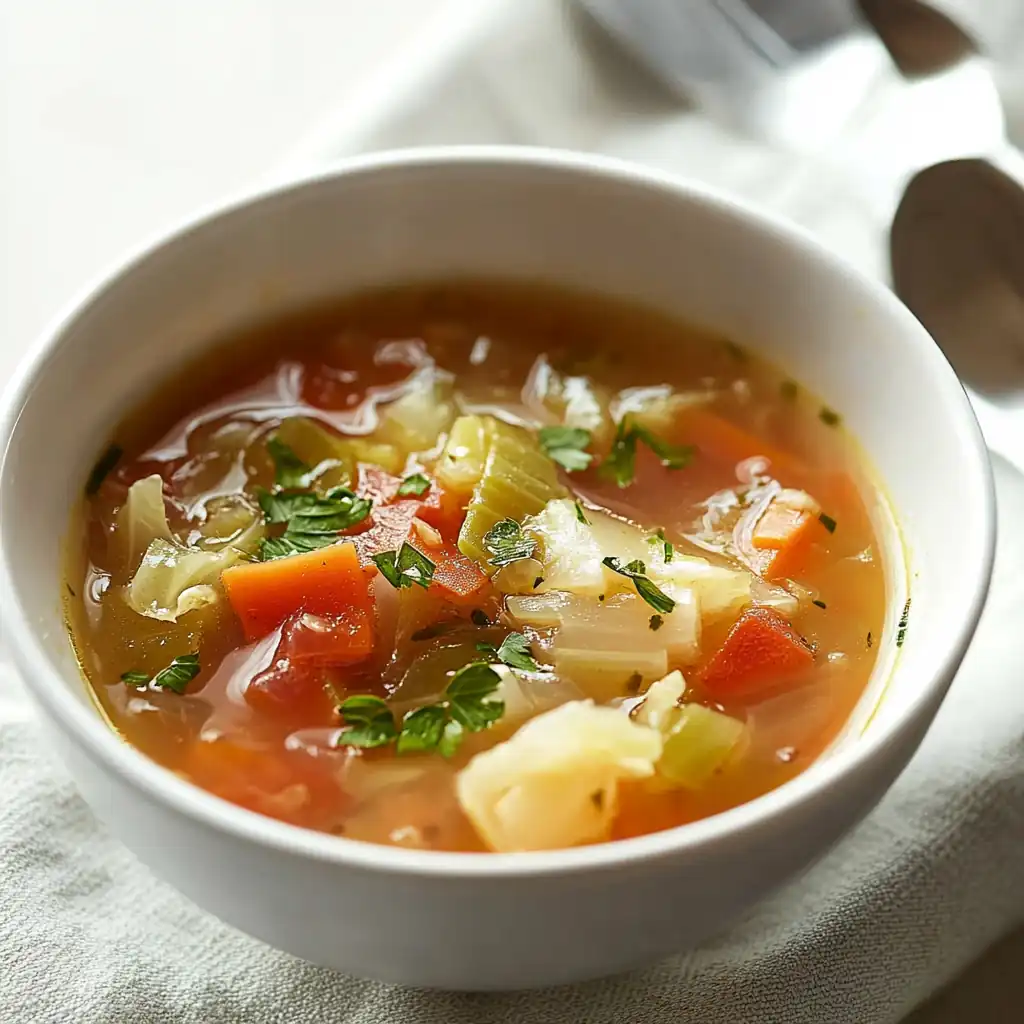
Pure bliss in a bowl.
Do not overcook the cabbage if you prefer a bit of texture in your soup.
Avoid using a pot that is too small to prevent the broth from splashing over.
Always taste for salt at the very end because broth reduces as it simmers.
Using a heavy-bottomed pot ensures the vegetables don’t scorch on the bottom.
Freshly cracked black pepper adds a heat that pre-ground pepper simply cannot match.
Perfecting the Cooking Process |
The secret to a professional result lies in the temperature control. Starting with a medium-high heat for the initial sauté allows the sugars in the carrots and onions to caramelize, creating a complex base. However, once the broth is added, dropping the temperature to a gentle simmer is non-negotiable. A rolling boil will break down the cabbage too quickly, turning it into mush rather than tender ribbons.
Timing is everything when it comes to the aromatics. Garlic burns rapidly, which introduces a bitter taste that can ruin the entire pot. garlic only after the primary vegetables have softened, you ensure the flavor remains sweet and pungent. Give the soup roughly 30 to 40 minutes of simmering time to reach the ideal consistency where the vegetables are soft but still hold their shape.
Add Your Touch |
Treat this recipe as a starting point for your own culinary exploration. If you desire a heartier, more filling meal, try stirring in a handful of cooked quinoa or diced potatoes during the last fifteen minutes of simmering. For a smoky twist, a teaspoon of smoked paprika or a few diced pieces of precooked chorizo can transform the profile from garden-fresh to rustic campfire.
Experimenting with greens can also elevate the nutritional value and color. Stir in a handful of fresh spinach or chopped kale right before serving to keep the greens vibrant and crisp. You might also consider adding a splash of apple cider vinegar at the end to wake up the flavors and provide a zesty contrast to the earthy cabbage.
Storing & Reheating |
Store your leftover soup in airtight glass containers in the refrigerator for up to five days. Because the cabbage continues to soften over time, the texture will change slightly, but the flavor usually improves as it sits. To freeze, use freezer-safe bags or containers, leaving a small amount of headspace at the top to allow for liquid expansion. This soup maintains its quality in the freezer for up to three months.
When reheating, avoid the microwave if you want to maintain the best texture. Instead, transfer the soup to a saucepan over medium heat and stir occasionally. If the broth has thickened too much during storage, add a splash of water or extra broth to loosen it up. Be careful not to bring the soup back to a hard boil, as this can overcook the vegetables that were already softened during the first cook.
1Sauté your vegetables in a mixture of olive oil and butter for a richer, silkier mouthfeel.
2Deglaze the pot with a tiny bit of white wine before adding the broth for extra acidity.
3Cut your cabbage into uniform sizes so every piece cooks at the exact same rate.
4Use a slotted spoon to serve the soup to ensure a balanced ratio of veg to broth.
5Add a pinch of sugar if the tomatoes make the broth taste too acidic.
FAQ |
- ●Q: Can I use red cabbage instead of green?A: You certainly can, but be prepared for a dramatic color shift. Red cabbage contains pigments that will turn your broth a deep purple or blue hue, which might look unusual but tastes nearly identical to the green version.
- ●Q: How do I stop the cabbage from smelling too strong?A: The key is to sauté the cabbage with the aromatics first and ensure you use enough acidity, like lemon juice or vinegar, at the end. This balances the sulfurous notes and creates a fresher, cleaner taste.
- ●Q: What is the best way to thicken the soup without cream?A: To achieve a thicker consistency, take a small amount of the cooked vegetables and broth, blend them into a paste, and stir them back into the pot. This creates a natural thickness without altering the flavor.
- ●Q: Is this soup suitable for a detox diet?A: This recipe is naturally packed with fiber and vitamins, making it excellent for health-conscious eating. To make it even lighter, reduce the amount of oil used for sautéing and stick to a low-sodium vegetable broth.

Hearty Garden Cabbage Soup: A Comforting Kitchen Adventure
- Total Time: 1 hour
- Yield: 6 servings 1x
Description
A comforting, vegetable-forward soup featuring tender cabbage, aromatic root vegetables, and a savory broth. Perfect for cold weather and meal prep.
Ingredients
- 1 medium head of green cabbage, chopped
- 2 large carrots, sliced
- 2 celery stalks, chopped
- 1 onion, diced
- 3 cloves garlic, minced
- 6 cups vegetable broth
- 1 can (14.5 oz) diced tomatoes
- 2 tbsp olive oil
- Salt and black pepper to taste
- 1 tbsp lemon juice
Instructions
- Sauté onions, carrots, and celery in olive oil over medium heat until softened.
- Stir in minced garlic and cook for 1 minute.
- Add chopped cabbage and sauté until slightly wilted.
- Pour in vegetable broth and diced tomatoes.
- Bring to a boil, then simmer on low for 30 minutes.
- Stir in lemon juice, salt, and pepper before serving.
- Prep Time: 15 minutes
- Cook Time: 45 minutes
- Category: Dinner
- Method: Simmering
- Cuisine: American


