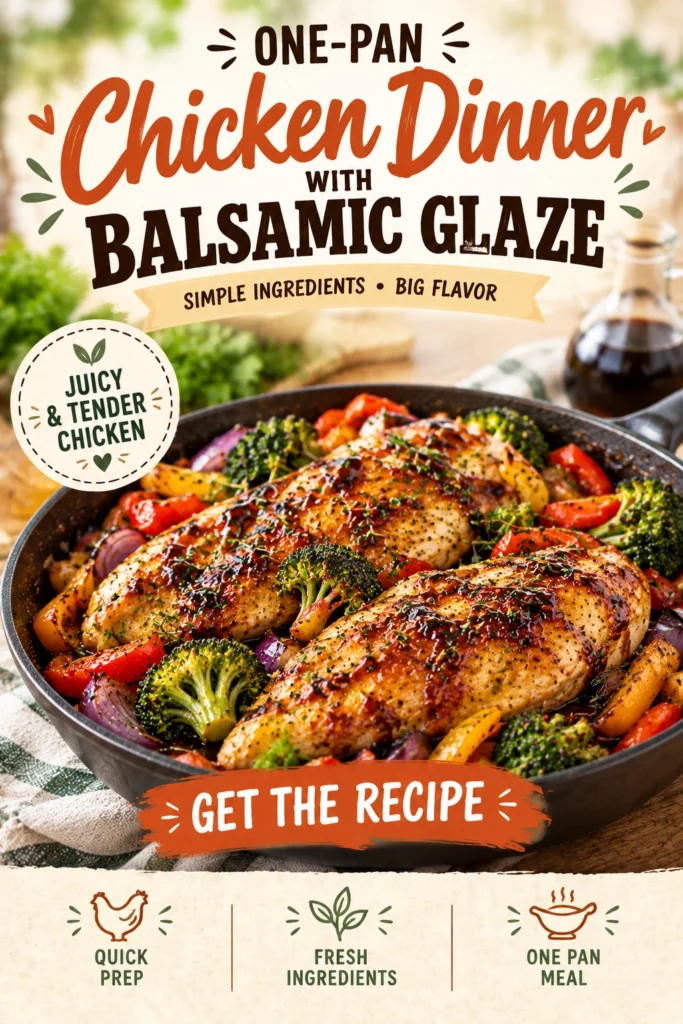
Tangy balsamic vinegar paired with caramelized brown sugar creates a sticky, savory glaze that cuts through the richness of seared chicken. This combination works because the acidity of the vinegar balances the natural sweetness of the glaze, while the heat of the pan concentrates those flavors into a thick syrup.
A single oven-safe skillet serves as both the searing tool and the roasting vessel. This approach keeps the meat juicy and the vegetables tender without requiring multiple pots.
Home cooks appreciate how the chicken juices mingle with the balsamic reduction to create a built-in sauce for the vegetables. It eliminates the need for separate side dish preparation.
The result is a cohesive meal where every component is coated in a consistent, glossy finish. It offers a sophisticated flavor profile that feels curated rather than rushed.
Compared to store-bought balsamic glazes, which often contain excessive thickeners and preservatives, this homemade version relies on reduction for its consistency.
Anyone seeking a high-impact dinner with minimal cleanup will find this method efficient. It balances nutritional value with a deep, satisfying taste.
The following guide details the specific techniques needed to achieve a perfect sear and a glossy glaze.
- ●Why You’ll Love This Recipe
- ●A Brief Background / Why This Recipe Works
- ●Perfect For Busy Weeknights and Family Dinners
- ●Chicken Spotlight
- ●Balsamic Vinegar Spotlight
- ●Key Ingredients
- ●How to Make It
- ●Pro Tips
- ●Delicious Variations
- ●Best Ways to Serve
- ●Storage and Leftovers
- ●Frequently Asked Questions
- ●Why This Recipe Belongs in Your Weekly Rotation
- ●Final Thoughts
Streamlining dinner doesn’t mean sacrificing the complexity of the flavors. This meal delivers a professional finish using common pantry staples.
- ●Reduced cleanup thanks to the single-pan method.
- ●Balanced flavor profile featuring sweet, sour, and salty notes.
- ●Quick preparation time that fits into a tight schedule.
- ●Versatile vegetable options based on what is in the fridge.
- ●Consistent results whether using chicken breasts or thighs.
- ●Natural glaze thickness achieved through simmering rather than cornstarch.
- ●Elegant presentation suitable for guests or family.
- ●High protein content paired with fiber-rich roasted vegetables.
- ●Minimal active cooking time once the pan enters the oven.
These elements combine to make the process stress-free while ensuring the final plate tastes intentional and polished.
A Brief Background / Why This Recipe Works |
Balsamic vinegar undergoes a specific aging process that gives it a deep, fruity complexity. When heated, the water evaporates, leaving behind a concentrated syrup that clings to proteins and vegetables.
Searing the chicken first creates a Maillard reaction, developing a brown crust that locks in moisture. This initial step provides a foundation of savory flavor that complements the sweetness of the glaze.
Using an oven-safe skillet allows for a seamless transition from stovetop to oven. The residual heat from the pan continues to cook the vegetables from the bottom while the oven heat browns them from the top.
The acidity in the balsamic glaze acts as a natural tenderizer for the chicken. This ensures the meat remains succulent even after the roasting process.
Perfect For Busy Weeknights and Family Dinners |
Tight schedules require meals that move quickly from prep to plate. This recipe minimizes the time spent standing over the stove, making it a reliable choice for Monday through Friday.
Family dinners often involve multiple tastes and preferences. The ability to swap vegetables or add a side of grains makes this adaptable for picky eaters or specific dietary needs.
Meal prepping becomes simpler when a large batch of chicken and vegetables can be cooked at once. The balsamic glaze holds up well over several days, maintaining its flavor during reheating.
During holiday gatherings, this serves as an excellent secondary dish. It provides a sophisticated flavor that pairs well with more traditional roasted meats or The Ultimate Peach Arugula Salad With Balsamic Glaze Fresh Summer Peach Salad
Chicken Spotlight |
Chicken serves as the hearty base of this meal, providing a neutral canvas for the bold balsamic reduction. Using skin-on thighs adds a layer of richness and prevents the meat from drying out during the roasting phase.
Chicken breasts are an excellent leaner alternative, though they require closer monitoring to avoid overcooking. Regardless of the cut, the protein absorbs the glaze, turning a simple piece of meat into a gourmet centerpiece.
Balsamic Vinegar Spotlight |
Balsamic vinegar is the defining element of the dish, providing both the acid and the sugar needed for the glaze. A high-quality vinegar results in a more complex, less acidic flavor.
When reduced, the vinegar transforms from a thin liquid into a syrupy coating. This process concentrates the grape-must flavors, creating a deep mahogany color that looks beautiful on the plate.
Beyond the chicken, the vinegar enhances the natural sugars in roasted vegetables, such as carrots or Brussels sprouts, mimicking the effect seen in Balsamic Chicken Brussels Sprouts Cranberries And Pumpkin Seeds Easy Sheet Pan Dinner
Key Ingredients |
The success of this dish depends on a few high-quality components that work together to build layers of flavor.
- ●Chicken — The primary protein that provides structure and satiety to the meal.
- ●Balsamic Vinegar — The acid source that creates the signature tangy glaze.
- ●Brown Sugar — Adds sweetness and helps the glaze thicken and caramelize.
- ●Garlic — Provides a pungent, savory aromatic base.
- ●Olive Oil — Used for searing the meat and roasting the vegetables evenly.
- ●Fresh Rosemary — Adds an earthy, piney aroma that complements the sweetness of the balsamic.
- ●Mixed Vegetables — Adds color, texture, and essential nutrients to the one-pan meal.
How to Make It |
Follow these steps to ensure the chicken is seared perfectly and the glaze reaches the ideal consistency.
- Prepare the glaze: Whisk together the balsamic vinegar, brown sugar, minced garlic, and dried herbs in a small bowl. Stir until the sugar has mostly dissolved; this prevents the glaze from burning in uneven clumps when it hits the hot pan.
- Sear the chicken: Heat olive oil in an oven-safe skillet over medium-high heat. Place the chicken skin-side down and cook until a deep golden brown crust forms. Avoid moving the meat too often, as this allows the sear to develop properly without sticking.
- Flip and brown: Turn the chicken over and cook for another 3-5 minutes. The goal is a colored exterior, not fully cooked meat, as the interior will finish in the oven. Remove the chicken to a plate and set aside.
- Sauté the vegetables: In the same skillet, using the rendered chicken fat, add your chopped vegetables. Cook for about 5 minutes until they begin to soften. Using the same pan ensures the vegetables pick up the browned bits of chicken left behind.
- Combine and glaze: Return the chicken to the pan, nestling the pieces among the vegetables. Pour the balsamic mixture over everything, ensuring each piece of chicken is well coated.
- Oven roast: Transfer the entire skillet to a preheated oven. Roast until the chicken reaches an internal temperature of 165°F. The liquid in the pan will bubble and reduce, thickening into a glossy glaze that coats the ingredients.
- Rest and serve: Remove the pan from the oven and let the meat rest for 5 minutes. This allows the juices to redistribute, ensuring the chicken remains moist when sliced.
1Refining a few small details can elevate the final texture and appearance of the dish.
- ●2Use a cast-iron skillet: This material retains heat more effectively than stainless steel, leading to a more consistent sear and better roasting.
- ●3Pat chicken dry: Use paper towels to remove surface moisture from the chicken before searing. Wet meat steams instead of browning.
- ●4Cut vegetables uniformly: Chop carrots, potatoes, or Brussels sprouts into similar sizes so they cook at the same rate.
- ●5Avoid over-reducing: Watch the glaze in the oven; if it becomes too thick or looks like it is burning, add a tablespoon of water or chicken broth to loosen it.
- ●6Use a meat thermometer: Check the thickest part of the chicken to prevent overcooking, which is the most common mistake with lean cuts.
Delicious Variations |
Adjust the ingredients to fit your dietary needs or to reflect the current season.
- ●Honey Swap: Replace brown sugar with honey or maple syrup for a different kind of sweetness.
- ●Citrus Twist: Add a squeeze of fresh orange juice to the balsamic mixture for a brighter, zestier flavor.
- ●Root Vegetable Mix: Use parsnips, rutabaga, and carrots for a hearty winter-style dinner.
- ●Dairy-Free Creaminess: Serve the chicken over a bed of cauliflower puree for a low-carb, creamy contrast.
- ●Spicy Kick: Stir in a pinch of red pepper flakes to the glaze for a subtle heat that cuts through the sugar.
These changes allow the core technique to remain the same while providing variety in taste and nutrition.
Best Ways to Serve |
The balsamic glaze is powerful, so pairing it with neutral or fresh sides helps create a balanced plate.
- ●Over Garlic Mashed Potatoes: The creamy potatoes soak up the extra balsamic reduction perfectly.
- ●With Quinoa or Brown Rice: Grains provide a nutty base that complements the tangy glaze.
- ●Alongside a Fresh Green Salad: A light salad with a lemon vinaigrette cuts through the richness of the roasted meat.
- ●With Crusty Bread: A toasted baguette is ideal for mopping up the remaining glaze from the pan.
For a more formal presentation, slice the chicken breasts on a bias and fan them over the roasted vegetables. Drizzle the remaining pan sauce over the top for a professional look.
If you prefer a different protein, this glaze also works exceptionally well for beef, similar to the method used in One Skillet Beef Dinner With Balsamic Glaze Easy Weeknight Beef Recipe
Storage and Leftovers |
Refrigerating
Place cooled chicken and vegetables in airtight containers. The meal stays fresh in the refrigerator for 3 to 4 days. Keep the glaze poured over the meat to prevent it from drying out during storage.
Reheating
Reheat portions in a skillet over medium heat with a splash of water or chicken broth. This regenerates the glaze and prevents the chicken from becoming rubbery. Alternatively, use a microwave on medium power for 2 minutes, stirring halfway through.
Freezing
While the chicken freezes well for up to 2 months, the roasted vegetables may lose their texture. For the best results, freeze only the glazed chicken and pair it with fresh vegetables upon reheating.
Frequently Asked Questions |
- ●Q: Can I use chicken breasts instead of thighs?A: Yes, you can use breasts, but be mindful of the cooking time. Breasts cook faster and can dry out quickly, so check the internal temperature frequently and remove them from the oven as soon as they hit 165°F.
- ●Q: What if I don’t have an oven-safe skillet?A: Sear the chicken and sauté the vegetables in a regular pan, then transfer everything to a baking dish or sheet pan. Pour the glaze over the top before sliding the dish into the oven to finish.
- ●Q: Is there a substitute for balsamic vinegar?A: Red wine vinegar mixed with a small amount of honey or maple syrup is the closest alternative. While it lacks the depth of aged balsamic, it provides the necessary acidity to balance the sweetness of the glaze.
- ●Q: Why is my glaze too thin after roasting?A: This usually happens if the vegetables released too much moisture or the oven temperature was too low. You can place the pan back under the broiler for 2-3 minutes to quickly thicken the sauce.
- ●Q: Which vegetables work best for this recipe?A: Root vegetables like carrots, baby potatoes, and parsnips work well because they hold their shape. Brussels sprouts and red onions also caramelize beautifully with the balsamic glaze, adding a savory depth to the pan.
Why This Recipe Belongs in Your Weekly Rotation |
Managing a household requires recipes that are predictable and rewarding. The efficiency of a one-pan meal reduces the mental load of dinner preparation and the physical labor of cleaning.
The flavor profile is high-end, offering a taste that rivals restaurant fare without the associated cost. It proves that simple ingredients, when treated with the right technique, can create a complex meal.
Integrating this into a weekly routine ensures a healthy balance of lean protein and vegetables. It is a reliable solution for those who want gourmet results on a tight timeline.
Final Thoughts |
This one-pan dinner combines a savory sear with a tangy, sweet reduction to create a cohesive and satisfying meal. By using a single skillet, the flavors of the chicken and vegetables merge into a polished dish.
Choosing this recipe means spending less time scrubbing pots and more time enjoying a high-quality dinner. It is an accessible way to introduce bold, acidic flavors into a standard weeknight menu.
Gather your ingredients and turn your kitchen into a bistro tonight with this effortless balsamic creation.
One-Pan Chicken Dinner with Balsamic Glaze
- Total Time: 40 minutes
- Yield: 4 servings 1x
Description
A succulent chicken dinner featuring a sticky, tangy balsamic reduction and roasted vegetables, all prepared in one oven-safe skillet for effortless cleanup.
Ingredients
- 4 chicken thighs, bone-in, skin-on
- 1/3 cup balsamic vinegar
- 2 tablespoons brown sugar
- 3 cloves garlic, minced
- 1 teaspoon dried rosemary
- 2 tablespoons olive oil
- 1 lb baby carrots, peeled
- 1 lb baby potatoes, halved
- 1 red onion, cut into wedges
- Salt and black pepper to taste
Instructions
- Preheat your oven to 400°F (200°C).
- In a small bowl, whisk together balsamic vinegar, brown sugar, minced garlic, and dried rosemary until the sugar is mostly dissolved.
- Season chicken thighs with salt and pepper. Heat olive oil in an oven-safe skillet over medium-high heat.
- Place chicken skin-side down in the skillet and sear for 5-7 minutes until the skin is golden brown and crisp. Flip and sear for another 3 minutes.
- Remove chicken from the pan and set aside on a plate.
- Add carrots, potatoes, and red onion to the same skillet. Sauté for 5 minutes over medium heat until slightly softened.
- Return the chicken to the pan, nestling it among the vegetables. Pour the balsamic glaze evenly over the chicken and vegetables.
- Transfer the skillet to the oven and roast for 15-20 minutes, or until the chicken reaches an internal temperature of 165°F.
- Remove from oven and let the chicken rest for 5 minutes before serving. Spoon extra glaze from the pan over the meat.
- Prep Time: 15 minutes
- Cook Time: 25 minutes
- Category: Dinner
- Method: Searing and Roasting
- Cuisine: American