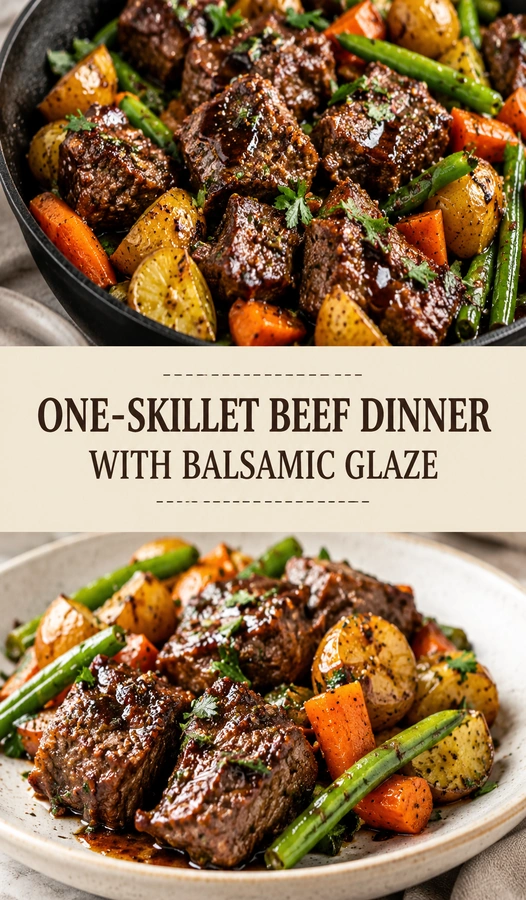
Getting dinner on the table after a long workday often feels like a battle against the clock. You want something that feels substantial and flavorful, but you do not want to spend an hour scrubbing multiple pots and pans.
This one-skillet beef dinner solves that problem by combining a protein and vegetable medley in a single pan. It reduces the cleanup effort while delivering a complex flavor profile.
The dish centers on the contrast between the tender, seared beef and the softened, caramelized edges of the roasted vegetables. This textural variety keeps every bite interesting.
Home cooks appreciate this recipe because the balsamic glaze ties everything together, adding a bright acidity that cuts through the richness of the meat.
Unlike store-bought pre-made beef meals that often taste overly salty or processed, this version uses fresh ingredients and a homemade reduction for a cleaner taste.
It is a reliable option for those who need a nutritious meal that looks sophisticated enough for guests but remains simple enough for a Tuesday night.
Below are the details and steps needed to master this skillet meal.
- ●Why You’ll Love This Recipe
- ●A Brief Background / Why This Recipe Works
- ●Perfect For Busy Weeknights and Meal Prep
- ●Beef Spotlight
- ●Balsamic Glaze Spotlight
- ●Key Ingredients
- ●How to Make It
- ●Pro Tips
- ●Delicious Variations
- ●Best Ways to Serve
- ●Storage and Leftovers
- ●Frequently Asked Questions
- ●Why This Recipe Belongs in Your Weekly Rotation
- ●Final Thoughts
This recipe simplifies the cooking process without sacrificing the depth of flavor usually found in slow-cooked beef dishes.
- ●Only one pan is used for searing, roasting, and glazing.
- ●The balsamic reduction provides a restaurant-quality finish.
- ●It incorporates multiple servings of vegetables into one meal.
- ●Preparation time is minimal before the pan takes over.
- ●Beef sirloin provides a lean yet tender protein option.
- ●The ingredients are common pantry staples.
- ●It scales easily for larger families or small appetites.
- ●The cooking time is significantly shorter than a roast.
- ●It works well for those tracking their macronutrients.
- ●The flavor profile is balanced between sweet, salty, and acidic.
These factors make it a versatile addition to any kitchen repertoire.
A Brief Background / Why This Recipe Works |
The success of this meal lies in the process of deglazing. When beef sears in a hot pan, it leaves behind browned bits known as fond. vinegar and honey, those concentrated flavors are lifted from the pan and incorporated into a thick sauce.
Combining the vegetables in the same pan allows them to cook in the rendered beef fat. This adds a layer of savory depth to the carrots and Brussels sprouts that steaming or boiling cannot achieve.
Using a high-heat sear followed by a lower-heat glaze prevents the meat from becoming tough. The timing is calculated to ensure the vegetables reach a fork-tender consistency just as the sauce thickens.
This method transforms a simple set of ingredients into a cohesive, polished dinner.
Perfect For Busy Weeknights and Meal Prep |
When time is limited, the ability to cook a complete meal in one vessel is invaluable. This dish eliminates the need for separate side dishes, making it an ideal choice for those who want to minimize kitchen time.
For meal prep enthusiasts, this recipe holds up exceptionally well. The balsamic glaze acts as a preservative for the flavor, ensuring the beef remains moist when reheated in the microwave or oven.
Families will find this recipe helpful because it balances protein and greens in a way that appeals to different palate preferences. It is a hearty meal that satisfies without leaving you feeling overly heavy.
While primarily a weeknight staple, the elegance of the glaze makes it a suitable option for a casual dinner party where you prefer to spend time with guests rather than at the stove.
Beef Spotlight |
Sirloin steak is the primary choice here because it offers a lean profile while maintaining enough marbling to stay juicy during a high-heat sear. Its mild beefy flavor allows the tang of the balsamic glaze to shine without being overpowered.
Cutting the beef into uniform cubes ensures that every piece cooks at the same rate. This prevents the common issue of having some pieces overcooked and others raw, which often happens with larger cuts in a skillet.
Balsamic Glaze Spotlight |
The balsamic glaze is the defining element of the dish. It starts as a thin vinegar but transforms into a syrupy coating that clings to the beef and vegetables.
The combination of the vinegar’s acidity and a touch of honey creates a gastrique-style sauce. This balance is essential for cutting through the richness of the beef and the earthiness of the vegetables.
It adds a deep, mahogany color to the final presentation, making the dish look visually appealing and professionally prepared.
Key Ingredients |
These components work together to create a balanced, savory-sweet meal.
- ●Sirloin Beef — provides a hearty, protein-rich base with a tender texture.
- ●Balsamic Vinegar — contributes a sharp, acidic tang and a dark, rich color.
- ●Honey — adds a subtle sweetness to balance the vinegar and help the sauce thicken.
- ●Brussels Sprouts — offer an earthy flavor and a slightly charred exterior.
- ●Carrots — bring a natural sweetness and a vibrant orange hue.
- ●Garlic — adds an aromatic, pungent depth to the searing process.
- ●Olive Oil — serves as the cooking medium to prevent sticking and conduct heat.
- ●Fresh Thyme — provides a woody, herbal aroma that complements the beef.
How to Make It |
Follow these steps carefully to ensure the beef stays tender and the sauce reaches the correct consistency.
- Sear the beef: Heat olive oil in a large skillet over medium-high heat until it shimmers. Pat the beef cubes dry with paper towels to ensure a proper crust, then add them to the pan. Brown the meat for about 2-3 minutes per side. Avoid overcrowding the pan, as this will cause the beef to steam in its own juices rather than sear. Remove the beef and set it aside on a plate.
- Sauté the vegetables: In the same skillet, utilizing the leftover beef fat, add the sliced carrots and halved Brussels sprouts. Cook them over medium heat for 5-7 minutes. Look for the edges of the sprouts to turn golden brown. If the pan looks too dry, add a teaspoon of olive oil.
- Add aromatics: Stir in the minced garlic and fresh thyme. Cook for only 60 seconds. Garlic burns quickly at high temperatures, which can introduce a bitter taste, so remove the pan from the heat if the garlic begins to darken too rapidly.
- Create the glaze: Pour in the balsamic vinegar and honey. Stir constantly as the liquid begins to bubble. Use a wooden spoon to scrape up the brown bits from the bottom of the pan. This process incorporates the concentrated beef flavor into the sauce.
- Simmer and reduce: Let the sauce bubble for 3-5 minutes on medium heat. You are looking for the liquid to reduce by about a third, turning into a thick, syrupy consistency that coats the back of a spoon.
- Combine and finish: Return the seared beef and any accumulated juices to the skillet. Toss everything together for 2 minutes until the beef is heated through and evenly coated in the glaze. If the sauce becomes too thick, stir in a tablespoon of water or beef broth to loosen it.
1Small adjustments in technique can significantly improve the final result of this skillet meal.
- ●2Dry the meat: Excess moisture on the surface of the beef prevents browning. Always pat the cubes dry before they hit the oil.
- ●3Room temperature beef: Let the meat sit out for 15-20 minutes before cooking. Cold beef can drop the pan temperature too quickly, leading to uneven searing.
- ●4Uniform vegetable cuts: Slice carrots into thin coins and halve the sprouts so they cook at the same rate as the beef.
- ●5Avoid overcooking: Return the beef to the pan only at the very end. Overheating cooked beef can make it rubbery.
- ●6Use a heavy pan: A cast-iron or stainless steel skillet distributes heat more evenly than non-stick pans and allows for better browning.
Delicious Variations |
You can adapt this recipe to fit your dietary needs or the ingredients currently in your pantry.
- ●Swap the vegetables: Replace Brussels sprouts with broccoli florets or cauliflower for a different texture.
- ●Change the sweetener: Use maple syrup instead of honey for a more autumnal, woody flavor profile.
- ●Add a kick: Stir in a pinch of red pepper flakes during the garlic step for a subtle heat.
- ●Different beef cuts: Use flank steak or ribeye for a richer, more marbled experience.
- ●Grain addition: Stir in cooked quinoa or farro at the end to turn this into a more filling bowl.
These changes allow you to keep the core balsamic theme while varying the taste over time.
Best Ways to Serve |
While this is a complete meal on its own, pairing it with the right sides can elevate the experience.
- ●Creamy Mashed Potatoes: The potatoes soak up the extra balsamic glaze perfectly.
- ●Wild Rice Pilaf: A nutty rice base adds an earthy contrast to the sweet glaze.
- ●Fresh Green Salad: A simple arugula salad with lemon dressing balances the richness of the beef.
- ●Crusty Bread: Use a toasted baguette to swipe up the remaining sauce from the plate.
For a lighter option, serve the skillet over a bed of sautéed spinach or steamed kale. This keeps the meal low-carb while adding more nutrients.
If you are serving this for a dinner party, plate the beef and vegetables in a shallow bowl and drizzle extra glaze over the top for a professional look. You might also consider pairing this with a side like The Ultimate Peach Arugula Salad With Balsamic Glaze Fresh Summer Peach Salad to maintain a consistent flavor theme.
Storage and Leftovers |
Refrigerating
Store the leftovers in an airtight container in the refrigerator for up to 4 days. The glaze will thicken further as it cools, which is normal.
Reheating
Reheat in a skillet over medium-low heat with a splash of water or beef broth. This loosens the glaze and prevents the beef from drying out. Avoid the microwave if possible, as it can make the beef tough.
Freezing
This dish can be frozen for up to 3 months. While the beef freezes well, the vegetables may lose some of their firmness upon thawing. Thaw overnight in the fridge before reheating.
Frequently Asked Questions |
- ●Q: Can I use a different vinegar if I do not have balsamic?A: You can use red wine vinegar combined with a small amount of brown sugar to mimic the sweetness and acidity of balsamic. However, you will lose the characteristic dark color and the deep, syrupy consistency that balsamic provides.
- ●Q: How do I stop the Brussels sprouts from tasting bitter?A: Ensure you sear them on medium-high heat until they are well-browned. Caramelization transforms the natural bitterness of the sprouts into a nutty sweetness. Avoid steaming them, as that often preserves the bitter notes.
- ●Q: What is the best cut of beef for this recipe?A: Sirloin is recommended for its balance of tenderness and leaness. If you prefer a more luxurious taste, ribeye works well, though you may need to drain some of the excess fat before adding the glaze.
- ●Q: My sauce is too thin; how can I thicken it quickly?A: Continue simmering the sauce for another 2-3 minutes without the meat. If it still feels too thin, you can whisk in a tiny pinch of cornstarch dissolved in water, though reduction is the preferred method.
- ●Q: Can I make this recipe dairy-free or vegan?A: This recipe is naturally dairy-free. To make it vegan, replace the beef with extra-firm tofu or portobello mushroom caps and use maple syrup instead of honey for the sweetener. It is worth taking your time with this step — patience and attention to detail make a noticeable difference in the final texture, flavour, and presentation of the finished dish.
Why This Recipe Belongs in Your Weekly Rotation |
Maintaining a healthy diet is much easier when you have a set of reliable, one-pan meals. This beef dinner provides a high-protein, vegetable-rich meal that does not require an exhaustive list of ingredients or hours of labor.
The versatility of the balsamic glaze means you can easily swap the vegetables based on what is in season. In the summer, you could use zucchini; in the autumn, you could use squash, similar to the Savory Harvest Butternut Squash And Sausage Skillet Easy Recipe For Fall Dinner Healthy Autumn Meal
Because it cleans up quickly and tastes like a gourmet meal, it removes the temptation to order takeout on stressful nights. It is a sustainable, delicious way to feed your family while keeping your kitchen manageable.
Final Thoughts |
This one-skillet beef dinner combines seared sirloin, caramelized vegetables, and a tangy balsamic reduction into a single, cohesive meal. It focuses on simple techniques to achieve a sophisticated flavor profile with minimal effort.
Grab your favorite skillet and give this savory, sweet dinner a try tonight.
One-Skillet Beef Dinner with Balsamic Glaze
- Total Time: 35 minutes
- Yield: 4 servings 1x
Description
A tender and savory beef skillet featuring seared sirloin and roasted vegetables coated in a rich, homemade balsamic glaze.
Ingredients
- 1.5 lbs sirloin beef, cut into 1-inch cubes
- 1/2 cup Brussels sprouts, halved
- 2 medium carrots, sliced into thin coins
- 3 cloves garlic, minced
- 1 tablespoon fresh thyme leaves
- 1/4 cup balsamic vinegar
- 2 tablespoons honey
- 2 tablespoons olive oil
- Salt and black pepper to taste
Instructions
- Season beef cubes generously with salt and black pepper.
- Heat olive oil in a large skillet over medium-high heat.
- Add beef in a single layer and sear for 2-3 minutes per side until browned. Remove beef from the pan and set aside.
- In the same pan, add carrots and Brussels sprouts. Sauté for 5-7 minutes until golden brown.
- Stir in minced garlic and fresh thyme, cooking for 60 seconds until fragrant.
- Pour in balsamic vinegar and honey. Simmer for 3-5 minutes, stirring occasionally, until the sauce thickens into a glaze.
- Return the beef and any juices to the pan. Toss for 2 minutes to coat everything in the glaze and heat through.
- Serve immediately over mashed potatoes or wild rice.
- Prep Time: 15 minutes
- Cook Time: 20 minutes
- Category: Dinner
- Method: Skillet
- Cuisine: American