The Art of the Winter Simmer |
Memories of freezing January afternoons always drive me back to the stove to recreate the exact warmth of a simmering pot of greens. I spent years refining this specific ratio of aromatics to cruciferous vegetables, seeking a balance that felt less like a diet food and more like a restorative embrace from a cast-iron pot.
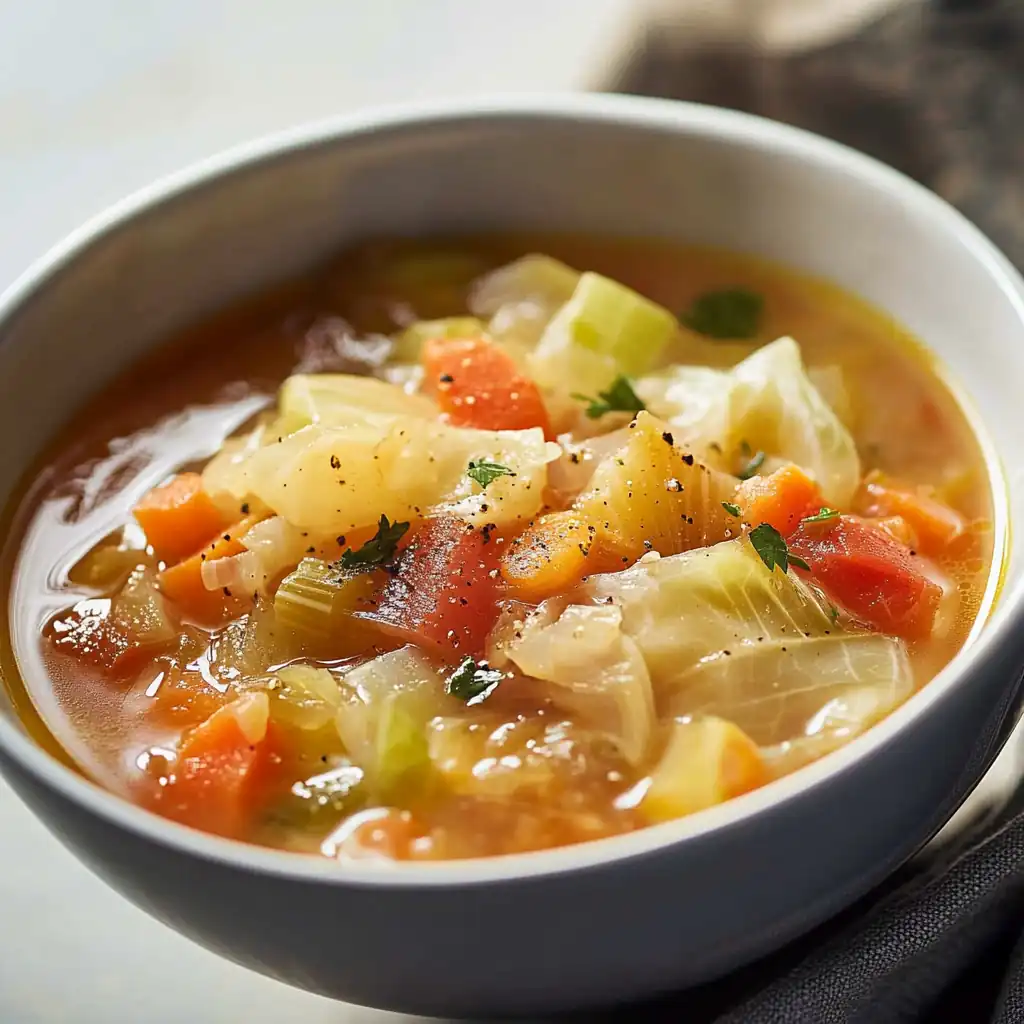
Success in this preparation relies entirely on the marriage of textures, specifically the contrast between the buttery, translucent softened cabbage and the slight, toothsome resistance of perfectly diced carrots. When these elements align, the soup transforms from a simple broth into a complex, layered experience that satisfies both the palate and the soul.
- ●Concentrated Nutrient Density. The slow-simmered cabbage releases vital minerals into the broth, providing a powerhouse of vitamins in every single spoonful.
- ●Unbeatable Cost Efficiency. Using humble, seasonal produce ensures that you can feed a large crowd without compromising on the depth of flavor or quality.
- ●Exceptional Freezer Longevity. This soup maintains its structural integrity and taste profile after freezing, making it the ideal candidate for strategic meal prepping.
- ●Natural Flavor Synergy. The sweetness of caramelized onions perfectly offsets the earthy, sulfurous notes of the cabbage for a balanced taste.
- ●Versatile Base Potential. You can easily pivot the flavor profile by adding a splash of soy sauce or a pinch of smoked paprika.
Essential Ingredients |
Green Cabbage: I prefer organic, tightly packed heads for the best crunch; skipping this obviously removes the heart of the dish and its primary texture.
Carrots: Heirloom varieties offer a deeper sweetness than standard supermarket carrots; omitting them loses the essential beta-carotene and natural sugar.
Celery: Always buy the stalks with leaves attached for extra flavor; without it, the broth lacks the foundational salty-green aromatic base.
Yellow Onion: Vidalia onions are my choice for a softer sweetness; skipping the onion results in a flat, one-dimensional flavor profile.
Beef or Vegetable Broth: I trust low-sodium stocks to maintain control over the salt levels; using water instead will leave the soup tasting thin and bland.
Garlic: Fresh, plump cloves are non-negotiable here; without garlic, you lose the pungent depth that defines a savory broth.
Tomato Paste: Double-concentrated paste provides the best color; skipping this removes the necessary acidity that cuts through the cabbage’s richness.
 Let’s Make it Together |
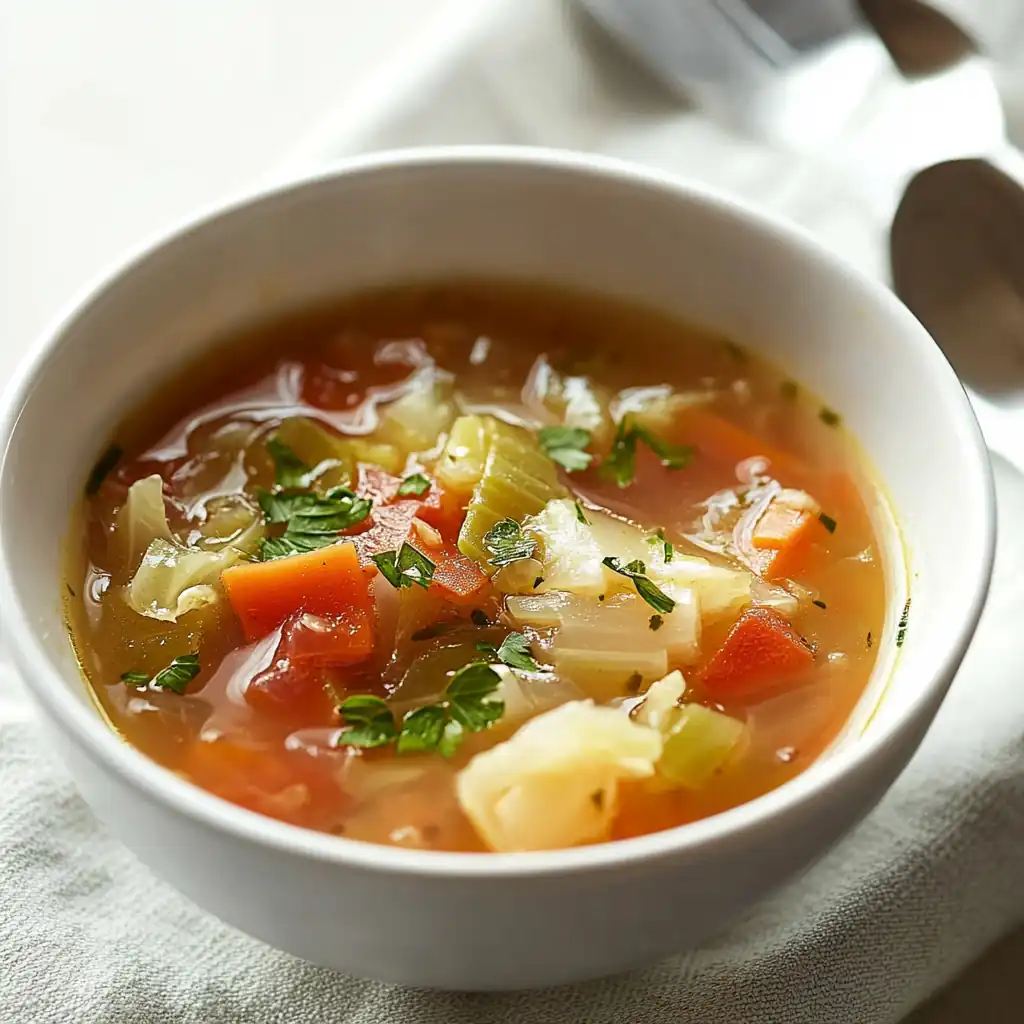
- Sauté the diced onion, carrots, and celery in a heavy-bottomed pot over medium heat until the onions appear translucent. Ensure you don’t brown the vegetables too quickly, as a gentle soften is the goal to avoid bitterness.
- Stir in the minced garlic and tomato paste, cooking for exactly two minutes until the paste turns a deep brick red. Watch for the fragrance to peak, but avoid letting the garlic turn brown or it will taste acrid.
- Add the shredded cabbage to the pot, stirring constantly for five minutes until the leaves begin to wilt. Look for the cabbage to shrink in volume and release its initial moisture; avoid overcooking it at this stage to keep some texture.
- Pour in the broth and bring the mixture to a gentle boil before immediately reducing the heat to a low simmer. The liquid should barely ripple, ensuring the vegetables don’t break apart from aggressive boiling.
- Cover the pot and simmer for 30 to 40 minutes, or until the cabbage is tender but not mushy. Periodically check that the liquid hasn’t evaporated too much; if it has, add a splash of water to maintain the consistency.
- Taste the broth and adjust with salt, black pepper, and a teaspoon of lemon juice for brightness. The final flavor should be savory with a clean, acidic finish that lifts the heavier vegetable notes.
Never boil the soup on high heat for the entire duration or the vegetables will disintegrate.
Always remove the tough core of the cabbage before shredding to avoid woody chunks.
Use a heavy-bottomed pot to prevent the tomato paste from scorching at the base.
Adding acid at the very end prevents the cabbage from losing its vibrant color.
Sautéing the cabbage before adding liquid unlocks sugars that boiling alone cannot achieve.
Perfecting the Cooking Process |
Temperature control is the most critical technical aspect of this dish. You must maintain a steady simmer—roughly 185 to 200 degrees Fahrenheit—to ensure the cabbage softens without losing its structural integrity. Have you ever noticed how a hard boil turns vegetables into a puree? That is exactly what we are avoiding here.
Timing the addition of ingredients is equally vital. the hardest vegetables (carrots) and ending with the delicate acidity (lemon juice), we build a flavor architecture. This sequential layering ensures that every ingredient reaches its peak texture at the exact same moment the pot is removed from the heat.
Add Your Touch |
For those craving a more rustic, protein-heavy version, consider browning sliced kielbasa or smoked sausage in the pot before sautéing the vegetables. The rendered fat from the meat incorporates a smoky depth that pairs exquisitely with the sweetness of the cabbage.
If you prefer a creamy consistency, stir in a tablespoon of heavy cream or a dollop of Greek yogurt right before serving. Why settle for a clear broth when you can have a velvety texture that coats the palate and softens the garlic’s edge?
Storing & Reheating |
Transfer the cooled soup into airtight glass containers, leaving a small amount of headspace at the top. This soup keeps beautifully in the refrigerator for up to five days, often tasting better on day two as the flavors meld.
Reheat the soup on the stove over medium-low heat rather than in the microwave to avoid uneven hot spots. Stir gently to prevent the cabbage from breaking, and add a tiny splash of water if the broth has thickened too much during storage.
1Deglaze your pot with a tablespoon of apple cider vinegar to add a hidden complexity.
2Cut your cabbage into uniform ribbons to ensure every piece cooks at the same rate.
3Sift your salt in stages rather than all at once to avoid over-seasoning the reduction.
4Use a slotted spoon to remove excess foam from the surface for a clearer broth.
5Pair this soup with a crusty sourdough loaf toasted with salted butter for contrast.
FAQ |

Classic Hearty Cabbage Soup: A Chef’s Technical Guide
- Total Time: 1 hour 10 minutes
- Yield: 6 servings 1x
Description
A refined, nutrient-dense cabbage soup featuring caramelized aromatics and a balanced, savory broth. Technical precision ensures perfectly textured vegetables.
Ingredients
- 1 medium head green cabbage, shredded
- 3 large carrots, diced
- 2 stalks celery, diced
- 1 yellow onion, diced
- 4 cloves garlic, minced
- 2 tbsp tomato paste
- 8 cups low-sodium beef or vegetable broth
- 2 tbsp olive oil
- 1 tsp dried thyme
- 1 tbsp lemon juice
- Salt and black pepper to taste
Instructions
- Heat olive oil in a large pot over medium heat; sauté onion, carrots, and celery until translucent.
- Add garlic and tomato paste; cook for 2 minutes until fragrant.
- Stir in shredded cabbage and sauté for 5 minutes until wilted.
- Pour in broth and add dried thyme; bring to a boil then reduce to a low simmer.
- Cover and simmer for 30-40 minutes until vegetables are tender.
- Stir in lemon juice and season with salt and pepper before serving.
- Prep Time: 20 minutes
- Cook Time: 50 minutes
- Category: Main Course
- Method: Simmering
- Cuisine: American/European


